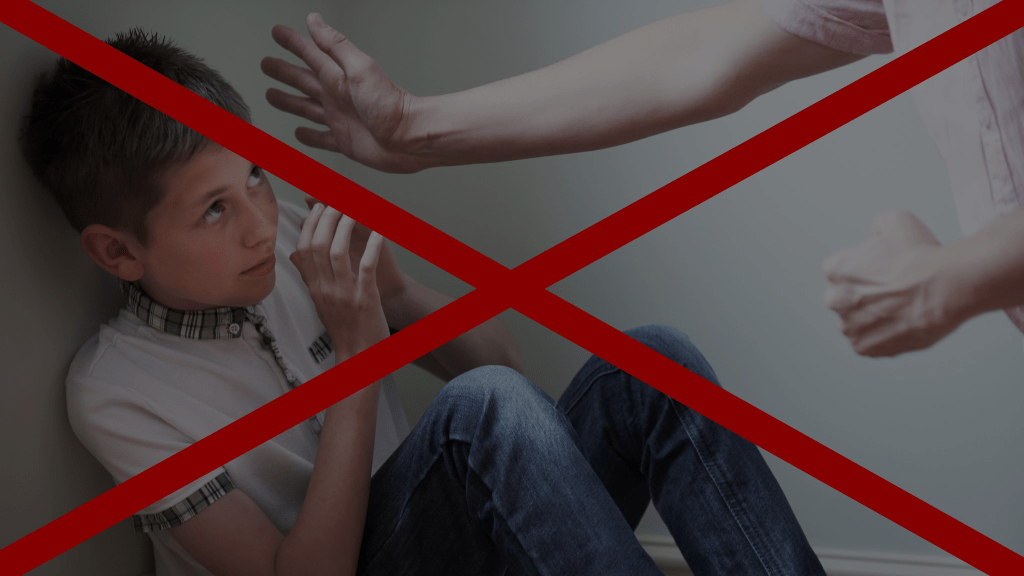
The Current Law in England
Battery (sometimes known as Common Assault) is any act whereby a person causes another to suffer immediate and unlawful violence, section 39 of the Criminal Justice Act 1988 provides that such an act is punishable by up to 6 months in prison, or up to 12-months where it is against an emergency worker.
There are several defences to such assault, most notable might be self-defence, whereby a person assaults another only to protect themselves, others, property or to prevent crime – a defence which makes perfect sense and would be entirely unreasonable were it not to exist. A defence which causes significant controversy is that of ‘reasonable chastisement’, formally referred to as ‘reasonable punishment’ under s.58 of the Children Act 2004. As early as 1860, in the case of R v Hopley, it was recognised that:
“By the law of England, a parent […] may for the purpose of correcting what is evil in the child inflict moderate and reasonable corporal punishment, always, however, with this condition, that it is moderate and reasonable.”
This defence has developed since then, with s.58 making it applicable only to simple battery, anything more extreme, including assault occasioning actual bodily harm, can never be justified when committed against a child for the purpose of punishment.
What this means, is that a parent has a defence in law to any physical punishment which constitutes a common assault or battery and is ‘reasonable and moderate’ in degree if it is by way of a chastisement. This is often reduced to advice that, so long as you don’t leave a mark, this is legal – an over simplification.
According to the Crown Prosecution Service, the following injuries would still constitute common assault and technically open to the defence of reasonable punishment:
- Grazes
- Scratches
- Abrasions
- Minor bruising
- Swelling
- Reddening
- Superficial cuts
Now this of course is caveated, a leg covered in minor bruises is likely ABH, as would a severely swollen jaw or reddening caused by several punches etc. But a parent smacking their child as chastisement which leaves a red mark, is still likely able to defend this action as reasonable – as such, the benchmark that “so long as it does not leave a mark” is firstly not true, but secondly it misses the bigger picture, what appears on the surface is a minor part of the problem with physical punishment, the majority lies in the deeper and longer term psychological impacts.
The Psychology of Physical Punishment
Child Psychologist Haim Ginott famously noted that:
“When a child hits a child, we call it aggression.
When a child hits an adult, we call it hostility.
When an adult hits an adult, we call it assault.
When an adult hits a child, we call it discipline.”
And it remains true today for many children in many countries. Calling it what it is, assaults on children are routinely, righteously, and rigorously defended by tens of millions of parents around the world – with the anecdotal fallacy playing a large role in the precipitation of these misguided opinions ‘I was spanked as a child and I turned out fine’.
But do children who are physically punished turn out fine? In short, no they don’t. Whilst some of course do, many in fact do, many go on to lead fulfilling and successful lives, the impacts are still there. The benchmark for ‘fine’ is not ‘has a successful life’, yet again further fallacies.
A recent study out of Harvard University looked at the impacts of corporal punishment, with key findings including:
“Preschool and school age children — and even adults — [who have been] spanked are more likely to develop anxiety and depression disorders or have more difficulties engaging positively in schools and skills of regulation, which we know are necessary to be successful in educational settings.”
This study is not one in isolation, the vast majority of studies for the past 40 years in this area have consistently shown that physical punishment is ineffective, it increases the risk of broad and enduring negative development outcomes, most child abuse stems form what parents believe to be reasonable punishment, and there has not been a single study finding that physical punishment enhances child development in any way. To simplify it, all the evidence points to is that physical punishment serves only one purpose, to alleviate the stress and frustration of the parents who inflict it.
Elizabeth Gershoff, a professor of human development, notes that:
“What many people won’t admit is that hitting a child can provide an emotional release and a fleeting sense of power for the grown-up. An adult may feel frustrated that they’ve lost control of the child, but when they strike the child, the child stops what they’re doing and usually starts crying. The adult feels vindicated by getting the child’s attention, and their pent-up frustration or anger is released. They believe “it worked,” and the strategy becomes reinforced.”
Gershoff also conducted an analysis in 2016 of over 75 studies, consisting of investigations and conclusions drawn from over 150,000 children, these studies resulted in 14 clear significantly harmful outcomes of physical chastisement of children including:
- Poorer moral reasoning
- Increased childhood and adulthood aggression
- Increased antisocial behaviour
- Mental health problems in childhood and adulthood
- Impaired parent-child relationship
- Lower self-esteem; and
- Alcohol or substance abuse problems in adulthood
Not only that, but the psychological and neurological impacts of ‘reasonable chastisement’ are indistinguishable from the impacts of physical abuse. With the brains of children who are hit, spanked and smacked eliciting similar responses to children who are victims of sexual violence.
But despite this clear evidence, the fallacy continues, 75% of children aged 2-4 continue to be disciplined with physical violence, and advocacy groups and legislators specifically campaign against the restriction of physical punishment. In England, the Be Reasonable Campaign notes that:
“Reasonable chastisement helps to train children to know how to behave, to set clear boundaries and to equip them for adult life. It has its basis in the unique relationship between parents and their children. Reasonable chastisement is part of loving parenting […] Reasonable chastisement is not harmful or degrading. It is one form of loving discipline.”
And 32% of the population, some 14 million people, support this belief.
Time For Change
Some 65 States Parties have fully prohibited corporal punishment, with 27 more committed to reforming the law towards such a ban, but that leaves millions of children growing up in countries where they are lawfully subjected to assaults.
Article 19 of the United Nations Convention on the Rights of the Child states:
“States Parties shall take all appropriate legislative, administrative, social and educational measures to protect the child from all forms of physical or mental violence, injury or abuse, neglect or negligent treatment, maltreatment or exploitation, including sexual abuse, while in the care of parent(s), legal guardian(s) or any other person who has the care of the child.”
In defiance of the Convention, England has refused to ban physical punishment of children.
In 2019, Scotland passed the aptly named Children (Equal Protection from Assault) (Scotland) Act 2019, completely outlawing any such physical punishment of children so as to:
“…give children the same protection from assault as adults.”
With Wales shortly implementing a mirrored law the following year, passing the Children (Abolition of Defence of Reasonable Punishment) (Wales) Act 2020.
It is clearly time for England to get in line and put children’s rights not ahead of others, but firstly on the same level. As it stands, the law allows for children, the most vulnerable in our society, to be treated as lesser, as property and chattel. The evidence is overwhelming, and history will not be kind to any government, campaigner, or individual who continues to support the silent and justified abuse happening under the guise of reasonable chastisement.
The Nightingale Rights Initiative calls on this, and any successive government, to immediately introduce a Bill to remove the defence of reasonable punishment and place the rights of children on an equal footing to the rest of society when it comes to physical violence and abuse.

Avaia Williams – Founder
This blog was published on 12 February 2024


I would gladly sign and share any petion in favour of the abolishment of any form of behavioral correction. Would the law support a parent who ‘smacked’ a child who then died of any kind of fit brought on by a panic attack or that of an asthmatic child?
LikeLiked by 1 person
An interesting question, in such a situation the law would not allow a defence. The chastisement must be reasonable and proportionate, there is a concept in criminal law known as the ‘thin skull rule’, sometimes called the ‘eggshell skull rule’.
This states that, a defendant must take their victim as they are, one cannot argue that they didn’t know the child suffered panic attacks or was asthmatic.
Simply, even if the injury is only occurring because of a unique feature of the victim, such as a thin skull, the defendant is still responsible for any consequences that stem from their actions, even if these consequences would not have been present in any other person.
-Avi
LikeLike