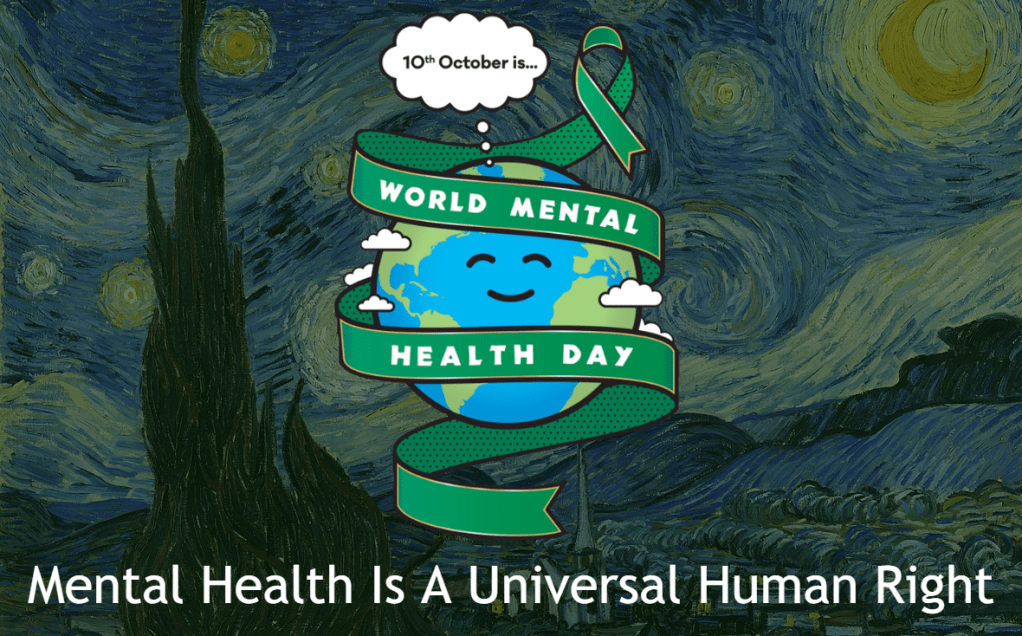
World Mental Health Day, an annual reminder of the importance of furthering positive mental healthcare and respect worldwide, this years theme being ‘mental health is a universal human right’. On this day, many people, organisations and governments proudly wave the flag for the cause. Sadly, too many then quickly lower that flag once the social media attention dies down. Mental ill health is something that impacts people each hour, of each day, of each year, it is not something that comes for a day and goes again once it’s relevance has died down.
Imagine navigating through your day, your week, or even your entire life, wrestling with an invisible burden, something that weighs you down, altering your perspective, feelings, your sense of belonging in the world, even your entire concept of reality. This invisible thread, experienced by more than 1-in-4 within the UK, is ever present and has a significant impact on most aspects of society, yet, it continues to be woefully ignored and underfunded.
How often do we pause to consider that our mental well-being is not just an individual matter but also one entwined with the broader tapestry of societal structures, most notably, basic and fundamental human rights? See, respecting human rights, such as those enshrined in international agreements like the International Covenant on Economic, Social and Cultural Rights, lays a foundation where mental health could flourish, not just barely survive (though, for some, even survival is unachievable at this stage with over 6,500 suicides in 2021).
It’s a no-brainer, really. A society that breathes respect for human rights naturally fosters an environment where mental health is allowed to blossom and be seriously addressed. It offers a secure space, free from stigma and discrimination, where individuals can seek help, express themselves, and importantly, be themselves, without the lurking fear of judgment or reprisal.
And yet, even with all the international pacts and national commitments, something’s amiss. It’s perhaps startling and somewhat disheartening to acknowledge that, despite such affirmations of our commitment to uphold these principles, folks grappling with mental health issues still often find themselves ensnared in a web of stigma, discrimination and even neglect. Perhaps less so in recent years, however, it is undeniable that a lack of funding and support leads to the diminishing of the rights of those struggling.
When we look closer to home, the UK courts have been challenged by certain aspects respecting mental health rights. Even the European Convention on Human Rights classifies those with mental health conditions alongside those with “infectious diseases and vagrants”. A curious categorisation, don’t you think? It’s a somewhat incongruent reality that many still grapple with, particularly considering the ostensibly progressive society we inhabit. It’s perplexing, and it’s something that nudges us towards a reflection, an introspection into how our systems view and respond to mental health, society as a broad selection might be more accepting and supportive of those struggling with their mental health, but what about the few who really matter and can actually make a difference?
But, let’s think bigger and broader. The mental health crisis, including rising suicide rates and the deteriorating mental health of our youth, aren’t merely statistics on a page or issues that simply mean more expense when looked over by those in power. They’re a cacophony of individual stories, silent screams, and unshed tears, reminding us that our approach to human rights and mental health care needs a sturdy bridge, not a meandering path that occasionally intersects, because this is dealing with real human lives.
Could a rights-based approach be the missing puzzle piece in improving mental healthcare? Perhaps embedding a solid, unwavering respect for human rights within our mental health care systems would pave the way for a landscape where care, empathy, and understanding aren’t merely slogans but a reality that permeates every interaction, every policy, and every intervention. A positive obligation on states to not only respect and promote positive mental well-being, but an enforceable legal rights to that effect.
Today, on World Mental Health Day, let’s remind ourselves that the gentle hum of mental well-being resonates deeply within the broader symphony of our collective human rights. Let’s remember that every policy, every act of kindness, and every step towards breaking down barriers makes a difference, creating ripples in the vast ocean of mental health and human rights – it is a slow fight, one that will see setbacks before true progress, but a fight that is beyond important nonetheless. Because, in acknowledging, respecting, and nurturing our mental well-being, we’re not merely observing a day on a calendar; we’re affirming the intrinsic value of every individual, recognising their worth, and honouring their journey.
In essence, we’re championing the very essence of what it means to be human.
So, let’s make a promise, not just to others, but to ourselves: to be that voice, that advocate, and that change, ensuring that our mental health and our human rights are not just respected but cherished and upheld, today, tomorrow, and always.



Avaia Williams – Founder
This blog was published on 10 October 2023

