
Throughout history, particularly in a country with such rich democratic and legal principles, laws have been created to establish order and protect citizens in all manner of circumstances. However, over time, some of these laws become outdated or irrelevant to modern society or society itself develops to such a degree where misinformation becomes commonplace. As a result, many legal myths emerge, but also, several strange laws continue to exist, even though they may seem bizarre or ridiculous.
Here are four of the most common legal myths and legends and four laws that you might be surprised still actually exist.
It is treason to put a postage stamp upside down on an envelope – FALSE

Probably the most common legal myth, one that is casually shared amongst lawyers and laypersons alike. It is popularly believed that placing a postage stamp, with the Queen’s face upside down, onto an envelope is a clear act of treason.
Unlike some of the legal myths on this list, it is easy to see where this confusion came from and it has a clear sequence in history. Under the Treason Act 1351, it was an offence punishable by death by being hung, drawn, and quartered (for men) or burned (for women), to ‘counterfeit the Great Seal or the Privy Seal’. The death penalty element of this offence was repealed by virtue of s.2 of the Forgery Act 1830, with the rest of the offence continuing. This offence was again restated in s.1 of the Forgery Act 1861 before finally being repealed and re-enacted in s.5 of the Forgery Act 1913 which states that it is an offence punishable by life imprisonment ‘to forge with intent to defraud or deceive the Great Seal of the UK’ or ‘His Majesty’s Privy Seal’, this provision is still fully in force today.
However, and this is a big however, in none of these Acts was it ever stated that this applied to the image of the Crown or any postage stamps.
It is illegal to wear a suit of armour inside the Houses of Parliament – True
After substantial turmoil in the early period of Parliament, namely coming from the King’s advisors continually seeking to take greater power away from the Crown, there was significant risk towards and between the members of what was then the Commons. This was particularly rife during the early reign of Edward II.

Following an armed march on London, and attendance at parliament, by nobles and magnates in 1312, including the Earl of Lancaster, the 1313 Statute Forbidding Bearing of Armour banned the wearing of armour and ‘coming with force’ to parliament.
Whilst there have been no such prosecutions under this enactment in recorded history, it technically remains on the statute book and has not been repealed in any way. Additionally, despite human rights principles, it is likely that banning the wearing of defensive armour inside such a significant place, would actually be lawful under the European Convention as pursuing a legitimate means in a proportionate way.
It is legal to shoot a Welshman with a longbow within the city walls of Chester – FALSE

Of course, it is entirely nonsense that this is lawful, however, this does not stop this ‘legal fact’ from being brought up anytime a Welsh person is around. The origin of this law is not entirely clear, however, there is a strong theory that it relates to the Prince of Wales. During the Battle of Shrewsbury in 1403, famous knight Sir Henry “Hotspur” Percy (from whom the football club is named after), was killed after defecting to the Welsh side, fearing an outbreak of sympathisers and further defections, Prince Henry as he then was, decreed that:
“[A]ll manner of Welsh persons or Welsh sympathies should be expelled from the city; that no Welshman should enter the city before sunrise or tarry in it after sunset, under pain of decapitation”
However, this decree, if it ever had full legal force at all, was very short lived indeed. Only five years later in 1408, John Ewloe, a Welshman, was elected as the mayor of Chester…putting to rest that the decree held any level of force.
Despite this, even if the decree had full legal force and had not been formally repealed, this would still hold no legal value as, in every aspect, newer laws have been put in place superseding any allowance for the killing of Welshmen.
It is illegal to drive cattle through the streets of London during the day – True
A legal truth which sounds beyond any sense or logic. It is, in fact, still a crime to ‘drive or conduct any cattle’ through the streets of London between 10am and 7pm, that is, of course, unless the person doing such driving has the permission of the police Commissioner; Sir Mark Rowley may be slightly too busy to grant such permissions, however.

The Metropolitan Streets Act 1867 has seen several amendments aimed at repealing irrelevant sections in the past 70 years, however, s.7, specifically banning the acts mentioned above, has never been repealed. Interestingly, the section was amended to remove a word in 1993, yet parliament at the time did not feel the removing of the whole section was relevant…There must have been a serious bovine problem in London at the time?
You can still be sentenced to death for committing an act of treason – FALSE
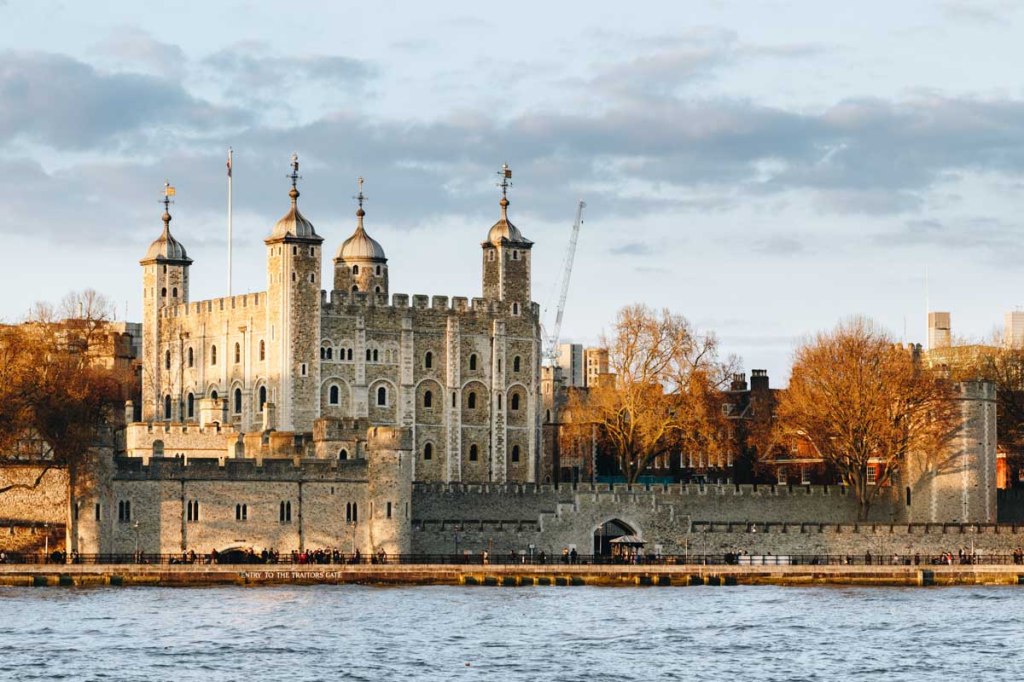
Following the theme of misconception number 1, it is a common belief that if you are convicted of treason that you can still be sentenced to death. This was the case up until 1998, fortunately nobody was ever tried for treason between WWII and this period as a multitude of issues would have arisen under the European Convention on Human Rights. Section 36 of the Crime and Disorder Act 1998 formally abolished the death penalty in respect of any offence of treason in the United Kingdom.
This repeal was thought to be a formality as there had been no charge of treason for almost 60 years at this point, however, with the first person in 80 years recently pleading guilty to an offence of treason, s.36 now appears to have been more than a simple formality.
It is illegal to be drunk…inside of a pub! – TRUE
“Where else would one get drunk if not a pub?”, one might think. However, the law has a different opinion here. Whilst the vast majority of the Licensing Act 1872 was repealed, s.12 remains in full force and states that ‘Every person found drunk in any highway or other public place, whether a building or not, or on any licensed premises, shall be liable…’.

Whilst this seems archaic and, for lack of a better term, backwards. The CPS have routinely brought prosecutions under this section at an incidence of around 600 per year (though there is no data which of these relate specifically to licensed premises).
What is perhaps more interesting is that, under s.143 of the 2003 Licensing Act, a similar offence exists. This section makes it an offence to not leave a licensed premises if drunk having been asked to do so by a police officer.
It is illegal to drive barefoot or in flip-flops – FALSE

The amount of legal misconceptions and myths surrounding driving are rife, but very few quite reach the level of notoriety as the footwear myth. This legal myth is not isolated to the UK, many countries perpetuate a similar myth, leading Jason Heimbaugh to write to the DMV in each of the 50 US states in the 1990’s to seek clarification, all of them confirming that no such law exists.
Like most legal urban legends, it is not clear where this myth comes from or where it starter. It is likely that the common practice of driving in suitable footwear became so commonplace that many accepted this as law and thus stated as such.
Whilst it is not illegal in the UK, Rule 97 of the Highway Code does state that all drivers “should ensure that clothing and footwear do not prevent you using the controls in the correct manner’. It is possible that driving barefoot of in flip-flops may not always be suitable, but it is certainly not illegal.
You cannot fire a cannon within 300 yards of a house – TRUE
This law, which makes more sense than most on this list, is strange simply by the fact it exists. The firing of cannons to the annoyance of individuals trying to live their lives must have been such a big problem in London, that in 1839 Parliament passed s.55 of the Metropolitan Police Act, making it an offence to discharge any cannot within 300 yards of a dwelling house.

Tchaikovsky fans will be saddened. However, the penalty for this very specific offence, is simply a level 1 fine. As such, for the low price of £200 per shot, you can annoy your neighbours with cannon fire as much as you like*
*Whilst this specific offence is minor, you would inevitably commit no fewer than 6 other offences in procuring a cannon, gunpowder, and discharging said cannon, as such, this is not formal legal advice…

Avaia Williams – Founder
This blog was published on Tuesday 28th February
 Nightingale Rights Initiative
I love this kind of history and grew up on ‘old wives tales.’ Some really interesting facts. We are a weird nation are we not?
LikeLiked by 1 person