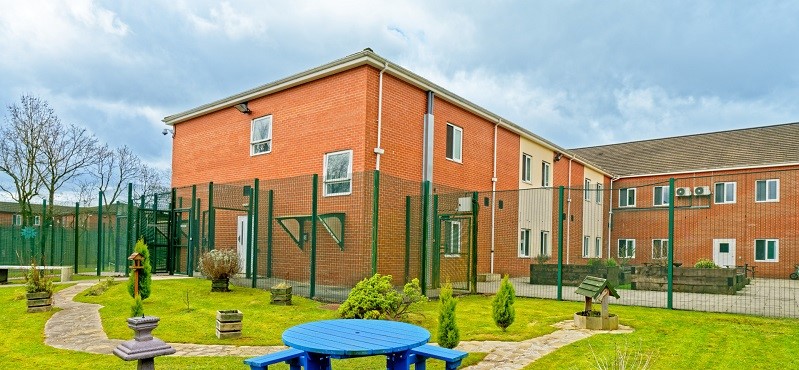
In the United Kingdom, indeed in many countries, an individual can be detained with or without consent if that detention is in their best interests, namely, the best interest of their mental health and psychological state. In the UK, the law which governs mental health detention is the Mental Health Act 1983.
There are different sections under the MHA which determine what kind of detention a person can be held under; this is where the term “being sectioned” comes from. There are three main sections which are relied on to detain a person in hospital, these are section 2; section 3 and section 5. Section 136 also allows individuals to be detained for a short period of time by the police.
There are many reasons for a person being sectioned, including, but not limited to:
- A person needing emergency assessment or treatment for a mental health problem – For example, individuals in such circumstances may be presenting with psychotic symptoms where they are unaware of their own condition. Such patients may feel they are not ill and do not need treatment.
- A person is presenting as an immediate danger to themselves or others – For example, a person who is expressing a serious desire to end their life or cause significant harm to themselves. Usually, for a suicidal person to be sectioned they would need to have taken significant steps to end their life, simply presenting with suicidal ideation is unlikely to be met with being sectioned.
- A person is in need of observation and treatment that cannot be provided in the community – For example, a person with bipolar who is presenting as acutely manic or a person with schizophrenia who is presenting as severely delusional may be unable to receive appropriate treatment in the community due to their mental state.
Usually a person will initially be held on a section 2, with this being ‘upgraded’ to a section 3 if they require more long-term treatment.
Section 2:
Section 2 deals with an admission for assessment. Section 2 states that a person may be detained for a period of up to 28 days if:

s.2(2)(a) he is suffering from mental disorder of a nature or degree which warrants the detention of the patient in a hospital for assessment (or for assessment followed by medical treatment) for at least a limited period; and
s.2(2)(b) he ought to be so detained in the interests of his own health or safety or with a view to the protection of other persons.
By virtue of subsection 3, in order to be detained on a section 2, two registered medical practitioners must agree to you being sectioned.
A section 2 detention can usually only be made once per admission i.e. a person cannot be detained for a period of more than 28 days by using section 2 consecutively.
A section 2 detention may happen where a person has been taken to hospital following an acute psychiatric episode and the mental health team are unaware of the problem, individuals experiencing their first psychotic episode may be sectioned on a section 2.
Section 3:
Section 3 deals with admission for treatment. Section 3 states that a person may be detained for a period of up to 6-months if:

s.3(2)(a) he is suffering from a mental disorder of a nature or degree which makes it appropriate for him to receive medical treatment in a hospital; and
s.3(2)(c) it is necessary for the health or safety of the patient or for the protection of other persons that he should receive such treatment and it cannot be provided unless he is detained under this section, and
s.3(2)(d) appropriate medical treatment is available for him.
By virtue of subsection 3, in order to be detained on a section 2, two registered medical practitioners must agree to you being sectioned.
A section 3 detention can be renewed indefinitely by a responsible clinician, i.e. a person can be detained for consecutive 6-month periods.
A section 3 detention may happen where a person has been detained on a section 2 and the mental health team wish to keep that person in hospital for a longer period of time to receive treatment for their mental health.
Section 5:
Section 5 deals with detention in hospital where a person is already admitted to hospital as a voluntary patient. There are two sections under section 5.
Section 5(2) states that a person can be detained in hospital for up to 72 hours, where they are already an in-patient in that hospital (whether for mental health or physical health) because

s.5(2) it appears to the registered medical practitioner or approved clinician in charge of the treatment of the patient that an application ought to be made under this Part of this Act for the admission of the patient to hospital,
Section 5(4) states that a nurse may detain a voluntary mental health in-patient for up to 6 hours where

s.5(4)(a) that the patient is suffering from mental disorder to such a degree that it is necessary for his health or safety or for the protection of others for him to be immediately restrained from leaving the hospital; and
s.5(4)(b) that it is not practicable to secure the immediate attendance of a practitioner or clinician for the purpose of furnishing a report under subsection (2)
A section 5(2) detention may happen where a person has been receiving help for a physical condition within hospital but whilst receiving this care they become acutely mentally ill and pose a risk to themselves if they were to leave the hospital.
A section 5(4) detention may happen where a person is a voluntary inpatient in hospital but they attempt to leave the hospital and the nurse on shift believes that person to represent a significant danger to themselves or another person if they were to leave.
Section 136:
Section 136 deals with detention in a ‘place of safety’ (usually a hospital, but can be a police station) by a police officer. Section 136 states that

s.136(1) If a person appears to a constable to be suffering from mental disorder and to be in immediate need of care or control, the constable may, if he thinks it necessary to do so in the interests of that person or for the protection of other persons—
s.136(1)(a) remove the person to a place of safety within the meaning of section 135, or
s.136(1)(b) if the person is already at a place of safety within the meaning of that section, keep the person at that place or remove the person to another place of safety.
A person can be detained for up to 24 hours, but in some cases 36 hours, under a section 136.
A section 136 detention may happen where a police officer comes across a person in significant mental distress and believes they need support from a mental health team within hospital, a common example where section 136’s occur is where a person is found in public expressing suicidal ideation.
Your rights whilst sectioned:
Whilst you are sectioned you will continue to have the rights you had whilst not under section, however, some of these rights may be being limited whilst you are sectioned (for example, Article 5 ECHR), a key right that is engaged whilst you are sectioned is Article 3 ECHR, the right to not be tortured or treated inhumanly or degradingly. You also have additional rights specific to being a patient within hospital.
Right to an Independent Mental Health Advocate (IMHA):
If you are detained under section (though not sections 4, 5, 145 or 136) you have the right to an Independent Mental Health Advocate. An IMHA provide support, advice and advocacy to those detained in hospital. An IMHA can help you to understand your rights whilst detained and can help you to express your views and opinions on your care whilst detained in hospital.
Right to information:
You have the right to receive information about being in hospital, information about the ward you are staying on (such as visiting times, telephone usage, rules etc.), information about the staff who will be looking after you (such as their name and job title) and general information about spending time as an inpatient. Usually, many wards will have information leaflets and factsheets that you can request to see. It is important to note that this right can, in theory, be restricted whereby the handing of physical information sheets to you would be too dangerous, such as if you were deemed to be likely of using them to cause harm to yourself.
You also have the right to a copy of the Mental Health Act Code of Practice, all hospitals that deal with mental health treatment should readily have a copy of the Code of Practice available to any patient who wishes to see it, if such a copy is not readily available then the hospital ought make arrangements for a copy to be made available as soon as reasonably possible i.e. reasonably a hospital would be required to print a copy if they claim to not have any available
Right to appeal:
You have the right to appeal your section to the First Tier Mental Health Tribunal. If you believe that you have been wrongly detained under a section of the Mental Health Act then you can appeal to the tribunal who can make a determination about your detention in hospital, recommend that you be transferred to a different hospital, recommend you receive care in the community, or recommend that you be allowed a period of leave. The tribunal can decide whether you can be discharged from hospital if appropriate or whether it was right to section you. The MHT is usually made up of a mental health tribunal judge, a non-legally qualified mental health professional, such as a social worker or psychologist, and a psychiatrist not connected to your hospital or care. If you disagree with the decision of the First Tier Tribunal on a point of law or serious factual error (such as a lack of evidence), then you can appeal to the Upper Tier Mental Health Tribunal. The Mental Health Tribunals can NOT change or recommend changes to your actual treatment within hospital i.e. they cannot recommend your medication be changed or your therapies be stopped.
Right to your medical notes:
You have the right to see copies of papers related to you being sectioned, such as those containing the reason for your section and the signing doctors. You may also have the right to see your medical records under a Subject Access Request, however, this right can be limited where the responsible clinician believes that it would not be in your best interest to see such notes, this is highly relevant to the field of mental health, whereby a patient may be disadvantaged or made worse by showing them their medical notes.
Right to complain:
You have the right to make a complain against the hospital if you believe they have acted wrongly against you in some way, for example if you think staff have mistreated you or you have not been given access to certain other rights mentioned above. You can make internal complaints directly to the hospital, or, you can make a complaint to the overarching body that deals with inpatient mental health hospitals, the Care Quality Commission.
Right to friends and family:
You have the right to see friends and family whilst you are detained under section, you also have the right to have access to a telephone to call friends and family, though this may be reasonably restricted i.e. not available at 3am. You have the right to receive letters from other people and have the right to send letters, however, you may be responsible for payment to send these. Within many inpatient hospitals in the UK, you are allowed to have your mobile phone with you, however, this can be restricted if you may use your phone to harm yourself, or if the hospital have a general policy against this, there is no direct human right to have a mobile phone.
Right to vote:
You are still able to vote if you are detained in hospital, you still have to register to vote and meet the usual requirements in order to be able to vote. You may have to register your address at the hospital where you are detained in some cases.
Useful Resources:
- Mind – Being Sectioned
- Mind – Legal Glossary
- NHS – Mental Health Act
- Rethink – Mental Health Act
- Royal College of Psychiatrists – Being Sectioned

This article was published on Saturday 19th June 2021
Should you have any questions, comments or concerns about this article then please do not hesitate to contact us
 Nightingale Rights Initiative