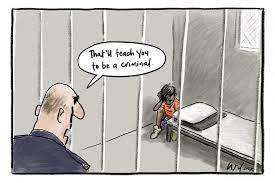
Too Young To Be A Criminal?

Shocking crimes involving children always draw the public’s attention to one of society’s biggest dilemmas: how should society address cases where children become perpetrators of alarming offenses?

Article 3(1) of the Convention on the Rights of the Child (CRC) states that:

“in all actions concerning children […] the best interests of the child shall be a primary consideration.”

The Age of Criminal Responsibility (“ACR”) is therefore a subject that requires careful consideration, as it involves finding a delicate balance between holding young individuals accountable for their actions while also recognising their potential for rehabilitation.

In this blog post, we will explore the concept of the ACR, examine different perspectives and discuss the potential implications and alternatives for dealing with young offenders.

Most countries worldwide, have established a minimum age for criminal responsibility (“MACR”), although a few exceptions exist. Nevertheless, the specific age threshold for MACR varies significantly, ranging from 7-18 years old (in England and Wales, the MACR is 10). The determination of this threshold is usually influenced by cultural, historical and legal factors, as well as a general consideration of child development and their capacity for moral and cognitive judgment.

Lowering the ACR?
Some proponents argue that setting a low ACR is necessary to establish clear boundaries and ensure accountability for criminal acts committed by children. They assert that early intervention can deter further criminal behaviour and provide appropriate support for the victims. Furthermore, it is argued that a low ACR promotes a sense of justice by treating children who commit serious offenses equally to adults.

Raising the ACR?
Conversely, there is a growing movement advocating for raising the ACR. Supporters argue that children, due to their limited cognitive and emotional development, may not fully understand the consequences of their actions. They contend that the focus should be on rehabilitation rather than punishment, aiming to address the root causes of delinquency and provide the necessary guidance and support to reintegrate young offenders into society.

Alternatives to Criminalisation
In response to concerns about criminalising young individuals, alternative approaches have gained attention. One such approach is the implementation of restorative justice practices, which focus on repairing the harm caused by criminal behaviour, fostering empathy and promoting accountability through dialogue and community involvement. Diversion programs, counselling and educational interventions are also gaining recognition as effective ways to address youth offending while emphasising rehabilitation.

Investing in education and prevention programs can play a crucial role in reducing juvenile delinquency rates. Providing access to quality education, mentorship and extracurricular activities can help steer children away from criminal behaviour and offer them positive alternatives for personal growth.

Conclusion
Determining the ACR is a complex task that necessitates careful consideration of numerous factors. While there are valid arguments for both lowering and raising the age threshold, the focus should remain on finding a balance between accountability and rehabilitation for young offenders.

Ultimately, society must strive to create a fair and just system that addresses the needs of young individuals, promotes their rehabilitation and ensures public safety.


Thekla Sorokkou – Writer

This blog was published on 15 July 2023
Strike-Breaking Ruled Unlawful, Unfair and Irrational by High Court

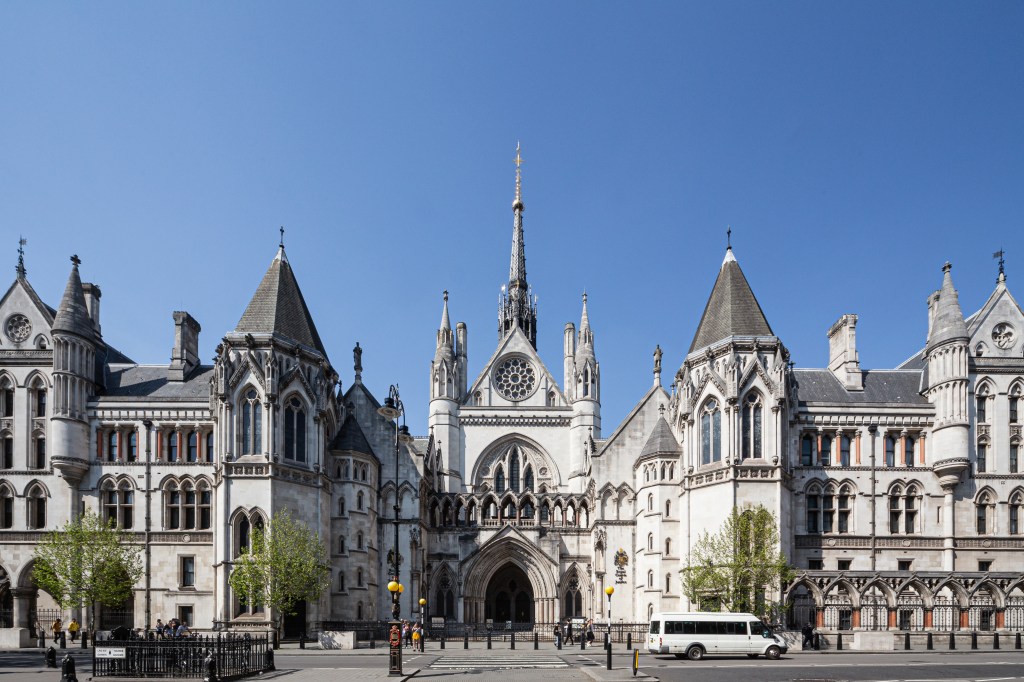
Royal Courts of Justice, home to the High Court

The High Court has today ruled that it is unlawful for employers to utilise agency workers to ‘fill in’ for striking workers during industrial action. Mr Justice Linden held that to allow agency workers to disrupt such industrial action was unfair, unlawful and irrational. The policy was originally implemented by former Chancellor of the Exchequer Kwasi Kwarteng.

The legal challenge came following The Conduct of Employment Agencies and Employment Businesses (Amendment) Regulations 2022, these Regulations repealed earlier legislation which made it unlawful for strikes to be disrupted in this way. The Government in introducing this repeal stated that it was to tackle:

“militant trade union action threatening to bring vital public services to a standstill […] For too long unions have been able to hold the country to ransom with the threat of industrial action but this vital reform means any future strikes will cause less disruption and allow hardworking people to continue with their day to day lives.”

Prior to this, bringing in agency staff to replace workers on strike or taking part in industrial action had been illegal since 1976.

The union UNISON, along with NASUWT and the TUC brought a legal challenge in May of this year arguing that this repeal represented a dangerous move and was likely a breach of Article 11 of the ECHR. Represented by barristers from Old Square Chambers, UNISON argued that the repeal was a fragrant violation of fundamental trade union rights, with general secretary Christina McAnea saying:

“Breaking strikes with unqualified and ill-experienced agency workers doesn’t address the root causes of why people are striking, and it only puts the public in danger.”

In ruling against the government, Mr Justice Linden held that Kwasi Kwarteng, then Business Secretary, failed to consult unions as required by the Employment Agencies Act 1973. He ruled that even if the Secretary of State had considered the responses to the 2015 Consultation before the decision on 13th June 2022, it would have been unfair and inconsistent with the aims of section 12(2), particularly pertaining to ensuring informed decision making.

Kwasi Kwarteng

The Secretary of State’s defence relied heavily on the established “very limited” duty to consult as outlined in section 12(2). The argument submitted stated that, “Provided that the consultation is conducted before any regulations are introduced…the duty to consult is satisfied.” It was argued that the Secretary of State had no formal responsibility to consult the claimants about the 2022 Impact Assessment.

UNISON general secretary Christina McAnea commented on the favourable ruling, saying:

“No one ever wants to go on strike. But when that difficult decision has been taken, employers should be throwing everything but the kitchen sink at ending a dispute, not inflaming tensions by undermining staff.

This futile piece of legislation has barely spent a year on the statute book. Parachuting untrained agency workers into the midst of industrial hostilities isn’t fair or safe for them, the public or the staff out on strike.

This is embarrassing for ministers. Not only did Kwasi Kwarteng help trash the economy as chancellor, now his bulldozer attitude when business secretary has made the government look extremely foolish…he ignored the advice of everyone around him, showing a total disregard for working people and their rights.

To spare themselves future shame, ministers should ditch their ill-advised strikes bill and focus instead on working with unions to solve the country’s many problems.”

TUC General Secretary Paul Nowak remarked:

“This is a badge of shame for the Tories, who have been found guilty of breaching the law. Bringing in less qualified agency staff to deliver important services risks endangering public safety, worsening disputes and poisoning industrial relations.”

The only government response at the time of writing reads:

“We are disappointed with the High Court’s decision as we believed the decision to repeal the ban on agency workers covering strikes complied with our legal obligations. The ability to strike is important but we maintain there needs to be a reasonable balance between this and the rights of businesses and the public. We will consider the judgement and our next steps carefully.”

It is unclear from this whether the government plans to appeal the ruling. If they choose to do so, the case will be taken to the Court of Appeal and possibly the Supreme Court – Two appellate courts which in recent years have not been favourable to government regulations, including a recent ruling by the Court of Appeal which held that Deportation of Asylum Seekers to Rwanda was Illegal. It is likely the government will be fighting an uphill struggle to convince the courts to reverse the ruling of the High Court.

This follows a number of recent attacks by the government on trade unions and strike rights, including the Strikes (Minimum Service Levels) Bill, which allows ministers to dictate the level of service that must be maintained within key sectors while industrial action takes place, essentially allowing them to minimise disruption to themselves while shirking their own responsibility and neglecting the striking workers. Yet the recent defeats in the courts go a long way in showing the government that these liberties will not be given up freely.


Jasmine Lowen – Writer

This blog was published on 13 July 2023
Fanning The Flames Against Free Speech – UN “Qur’an Vote” Sparks Debate

‘Book Burning’ – Mimi and Eunice

The 53rd Regular Session of the United Nations Human Rights Council has voted by 28 to 12 (with seven states abstaining), to adopt Resolution A/HRC/53/L.23 ‘Countering religious hatred constituting incitement to discrimination, hostility or violence’ more commonly being reported as the Qur’an burning resolution due to the events that preceded its introduction to the UN.

In June, an Iraqi protestor tore pages from the Qur’an outside of a mosque in Stockholm before wiping his shoes with some and burning others. The act caused outrage in several countries and was a leading cause behind Turkey vetoing Sweden’s application to join NATO. The outrage came due to Sweden holding this act was lawful under grounds of free speech, along with several previous protests including a formally permitted protest where a Qur’an was burned.

The Resolution notes:

“…with deep concern the rising incidents of desecration of sacred books and places of worship as well as religious symbols, which constitutes incitement to violence, echoing the strong rejection and condemnation of recurring acts of public burning of the Holy Qur’an in some European and other countries…”

The Resolution calls for specific action, including calling upon state parties to examine their national laws to identify any gaps which may “impede the prevention and prosecution” of such acts, and urges the High Commissioner for Human Rights to speak out against such forms of protest. The Resolution also, having been adopted, will result in a special panel discussion at the 54th regular session to identify drivers and manifestations of religious hatred and to propose deterrence to these drivers, a report on this panel will be presented at the 55th regular session along with the High Commissioner delivering an oral update on the matter.

Whilst several organisations and states have supported the resolution, numerous western countries, including the United Kingdom, United States, and EU, voted against the resolution citing the deep impact that this could have on the right to free speech and right to protest. The UK Ambassador and Permanent Representative to the UN, Simon Manley CMG, released a statement against the resolution stating:

“In combatting religious intolerance, there is a difficult balance to strike and in different societies, this balance is struck in different ways. It can be hard to determine at what point freedom of expression becomes unacceptable, and when unacceptable speech or action should be legally prohibited […] However, international human rights law provides us with narrowly defined parameters in which freedom of expression can be limited. And we do not accept that, by definition, attacks on religion, including on religious texts or symbols, constitute advocacy for hatred.”

With the passed Resolution specifically calling for banning of holy books, many free speech and human rights organisations are calling against such actions, citing the slippery impact that this could have. The chief executive of the National Secular Society has said:

“Equating the desecration of religious books and symbols with incitement to violence is a pernicious attempt to impose blasphemy laws by stealth. The Islamic nations behind this resolution have long been more interested in protecting religion than protecting individuals. Speech and expression must be viewed in context. Crude attempts to impose blanket prohibitions clearly risk capturing and silencing legitimate expression and dissent.”

It is vital that we seek to prevent religious hatred and to combat intolerance and violence against others based on any protected grounds, however, we must do so without the further restriction of the right to free expression and we certainly must do so without being pressured by states who do not promote the same democratic ideals and rights to freedom of religion as the states in which we live.

Any interferences with the right to free speech, including physical acts which constitute ‘speech’ must be necessary in a democratic society. These principles were restated by the Grand Chamber of the European Court of Human Rights in Stoll v Switzerland [2007], where the Court held that:

“Freedom of expression… is applicable not only to ‘information’ or ‘ideas’ that are favourably received or regarded as inoffensive or as a matter of indifference, but also to those that offend, shock or disturb. Such are the demands of pluralism, tolerance and broadmindedness without which there is no ‘democratic society’.”

Further, the defence of speech which does shock and offend is much more important than the defence of speech with which the majority agree. It is the absolute cusp of acceptable speech which must be defended even where it is not agreed with by the defender, a failure to do so results in the curtailing of speech for all, even where the expressed ideals are vastly different. Moving the bar away, even when it is away from speech, we all wish to distance ourselves from, is still a move away and closer to ‘acceptable’ speech becoming the new taboo speech. In defending hateful, reprehensible, vile and sick actions and ideals, we are defending the right of EVERYBODY to hold their views – The world of human rights does not exist in an easy to manage one, we cannot pick and choose each individual idea and hold it lawful or not, we must accept some negative to hold the positive and breaking it down any further results in vast interferences with the rights of millions.

The NRI believes in freedom of religion but also believes in freedom of expression, these rights co-exist and must be balanced against each other, neither one is more ‘right’ than the other and it is important that one is not used to destroy the other. The burning of religious texts, whilst a vile act, cannot, unless coupled with specific speech, be deemed to be incitement to religious hatred, in the same way that the burning of a flag should not be deemed to be hatred on the grounds of race or sexuality.

The same right that affords people the ability to publicly destroy copies of Mein Kampf, is the same right that affords people the ability to burn holy books.


Avaia Williams – Founder

This blog was published on 13 July 2023

Breaking News – ‘Child Pornography’ Is Illegal

In the United Kingdom, the age of consent, that being the age at which a person is deemed to have the capacity to consent to having sex (or engage in a form of sexual act), is 16. There are some exceptions to this, such as where there is a position of trust involved such as a teacher and their student, or where capacity overall is deemed lacking (such as by the Court of Protection).

However, those under 18-years-old are still considered children for the purposes of the law by virtue of Article 1 of the United Nations Convention on the Rights of the Child, this includes the Protection of Children Act 1978. This Act makes it so that any indecent image of a person under the age of 18 is illegal, this most commonly refers to nude images but can include other forms of indecency such as ‘nearly nude’ images in provocative poses, or images where there is no nudity but the surroundings of the image are indecent.

Section 1 of the Act makes for several offences:

“(1) …it is an offence for a person –
(a) To take, or permit to be taken or to make, any indecent photograph or pseudo-photograph of a child; or
(b) To distribute or show such indecent photographs or pseudo-photographs; or
(c) To have in his possession such indecent photographs or pseudo-photographs, with a view to their being distributed or shown by himself to others…”

These offences are made out even where the person who makes, distributes, or possesses is the person in the images. Whilst it is unlikely to be prosecuted in the case of, say, two 17-year-olds in a relationship who are exchanging such images, it is nonetheless a criminal offence. In R v M [2011], a 23-year-old man was convicted of two counts of making indecent images under the 1978 Act, this occurred as he engaged in consensual sex with a 17-year-old and after this he took images of her on his phone. The court found that this still constituted an offence, there were several reasons for this, but a primary ground was on the basis of public policy – That being one which is not strictly what the law writes, rather, one on which morality and societal cohesion requires. In this case, the argument is that children are inherently vulnerable, whilst consensual sex is one thing, this cannot be ‘shared’ or ‘spread’ in the way an image can, a child who has images taken of them, particularly in short term or non-committed relationships, is open to significant exploitation in the spreading of that image. The Court stated:

“The measures with which the court has been concerned are necessary for the prevention of crime, protection of morals and in particular for the protection of children from being exploited. The legislation does not criminalise consensual sexual activity between the Appellant and a child ages 16 or 17, rather then 1978 Act strikes the balance between keeping interference by the State in the private lives of individuals to the minimum and maintaining under the law maximum protection for children from sexual abuse and exploitation”.

This is the same reasoning behind recent ‘revenge porn’ offences in s.33 of the Criminal Justice and Courts Act 2015 but with the added protection that the child is unable to offer their consent whereas an adult is able to, the reasoning being simply that children lack as much insight into consequences and therefore the consent has to be restricted.

There are exceptions to the 1978 Act, the most notable being that where the 16- or 17-year-old is married to another person, then, they rightly can send images to their partner and their partner is not committing an offence. Whilst this seems like a rather strange exception, when considering the public policy argument of exploitation, it fits. This exception requires there to be a strong and binding contact of marriage in place, the likely result being that the relationship is a committed one and that person is less likely to suffer exploitation than would a young person engaging in casual sex or a non-committed relationship per se.

This means that, no matter how consensual the relationship (bar marriage) a person can never possess indecent images of a child, even where that child is the one who sends them.

As a matter of practicalities that the courts have not much argued for or expressed, in the digital and internet age, these protections are more vital than ever. An image is for all intents and purposes immortal, they are almost impossible to remove once they are out and they can multiply and be shared tens of thousands of times within a matter of minutes. In my former life, I trained local and central government on the issue of child protection, much of my research and training focused on sexual exploitation within the context of online grooming and ‘nudes’, this research uncovered a vast network of underground groups who would hunt and share such imagery, buy and sell it, and obsess over the people in the images to the point where these people were targeted for more – This is very emblematic of the moral and societal protections that the Court of Appeal were arguing for in R v M.

Whilst the argument about the BBC presenter accused of paying a child for such images is one that this article is not addressing specifically, this situation is a prime example of why these protections are important. A child is much more vulnerable to things such as financial exploitation or the inherent coercion that can arise with a ‘celebrity’ engaging in any such contact with a child, this is similar to situations we see with popular internet personalities or musicians who groom and exploit young fans for sexual gratification. Further, this situation has revealed the true extent of legal ignorance when it comes down to indecent images even at the most basic level and the need for education on these matters is vital.

If you have ever been impacted by the sharing of nude images or are concerned about any images which you may have accessed there are organisations who may be able to help or support you:


Avaia Williams – Founder

This blog was published on 12 July 2023

Deportation of Asylum Seekers to Rwanda Found Illegal in Court of Appeal

‘Deportation Airways’ – Emanuele Del Rosso

The UK Government’s controversial immigration policy which was set to relocate migrants to Rwanda while their asylum claims were processed was declared by majority vote to be
unlawful
by the Court of Appeal on the 29th June 2023.

Ten appellants from Syria, Iran, Iraq, Sudan, Vietnam and Albania, and charity Asylum Aid,
launched their appeal following their proposed removal to Rwanda as decided by the
Government in June 2022. The decision was lawful at the time following the £140 million
Memorandum of Understanding arranged between the UK and Rwanda’s governments.
The appeal rested predominantly on the declaration of Rwanda as a “safe third country”. It
was argued that the asylum system in Rwanda may not deliver reliable outcomes, with
grounds to believe that people with a good claim for asylum may in fact be sent to their
home countries where they have faced persecution or inhumane treatment.

Appellants would be found to be unsuccessful on several grounds including the retention of EU law under which it is unlawful to remove asylum seekers to safe third countries to which they have no connection. This law did not apply due to the EU Withdrawal Act 2020.
The case resulted in the majority, including the Master of the Rolls Sir Geoffrey Vos and
Lord Justice Underhill concluding that sending any asylum seekers to Rwanda would
constitute a breach of article 3 of the European Convention of Human Rights as mandated in the Human Rights Act 1998. This was due to Rwanda at present being unable to meet the requirements of classification as “safe”.

Prime Minister Rishi Sunak has vowed to challenge the appeal, going on the record saying
“While I respect the court I fundamentally disagree with their conclusions. The policy of this government is simple, it is this country – and your government – who should decide who
comes here, not criminal gangs, and I will do whatever is necessary to make that happen.”
The PM has also reiterated this in further statements to the Liaison Committee, promising to fight the ruling “vigorously” and expressing confidence that the plan is legal in spite of the Court of Appeal’s judgement.

Attorney General Victoria Prentis has hinted at the nature of these plans, saying “The
Government is going to make robust arguments before the Supreme Court and will be
applying for permission later today [06/07/2023]”. The Supreme Court is the final court of appeal in the UK and this is particularly significant as they have opposed government policies in recent years, notably ruling the five-week prorogation of Parliament unlawful in September of 2019, and Miller 1 and 2 ruling that withdrawal from the EU could not be initiated without an Act of Parliament, and rendering Boris Johnson’s advice to the Queen to prorogue Parliament unlawful.

Political opponents are calling for Sunak to scrap the policy altogether, with Yvette Cooper,
the home affairs spokesperson for Labour, saying, “The Rwanda scheme is unworkable,
unethical, and extortionate.” There has also been considerable public outcry against the policy from its introduction, with the recent government estimates that it would cost an average of £169, 000 per asylum seeker removed to Rwanda (up to £63, 000 more per person than allowing them to stay in the UK) raising economic issues as well as moral ones.

The full press release can be found here.


Jasmine Lowen – Writer

This blog was published on 10 July 2023

Why Are We Ignoring The Uyghur Genocide?

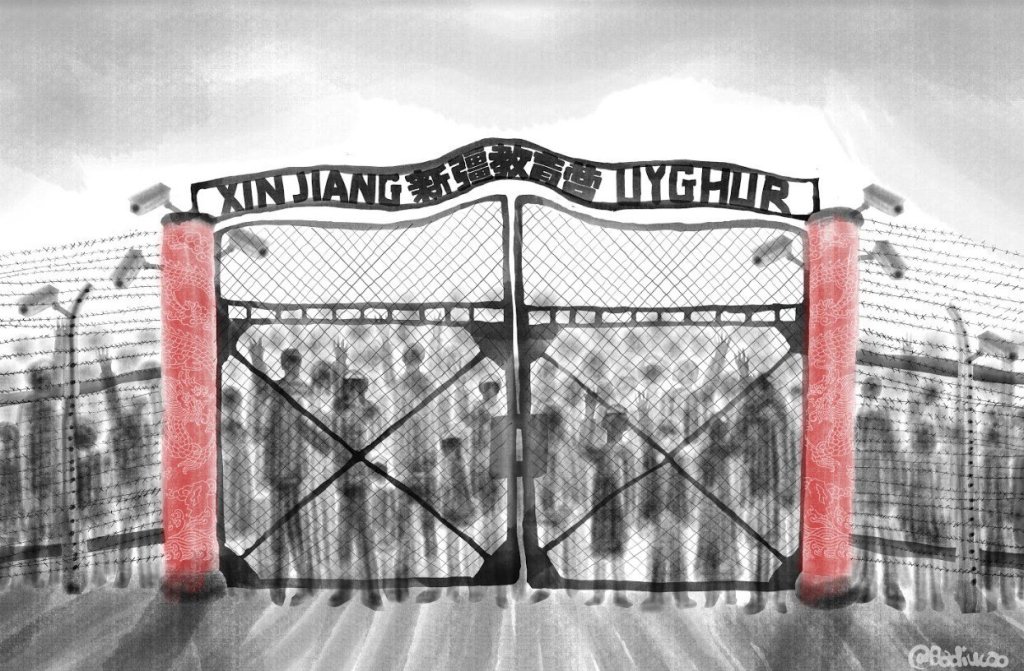
Xinjiang’s prison camps as drawn by dissident artist Badiucao

The Uyghur people are a majority muslim ethnic minority group located predominantly in northern China within the Xinjang Autonomous Region. Since around 2014, but very prominently from 2017 onwards, the Chinese Communist Party has conducted the largest scale campaign against an ethic minority group since World War 2, with estimates that over one million Uyghurs have been displaced into internment camps, colloquially called ‘re-education camps’ and ‘vocational training centres’ by the CCP.

The CCP and those in charge of these camps have committed numerous human rights violations in these, including initial arbitrary detention without any due legal process, forced labour and torture, sexual abuse and sterilisation, indoctrination, and religious and cultural suppression. Those not interned within such camps are subjected to heavy surveillance and hacking by the government.

The main argument made by the CCP is that the Uyghur are perpetrators of terrorism, extremism, and separatism. This ‘defence’ has received little support and evidence collected from numerous independent sources has shown that the scale of the issue is a deliberate and directed campaign to erase the Uyghur people through destroying their culture, religion, language, and identity.

Article 2 of the UN Convention on the Prevention and Punishment of the Crime of Genocide states that:

“…genocide means any of the following acts committed with intent to destroy, in whole or in part, a national, ethnical, racial or religious group, as such:

(a) Killing members of the group;

(b) Causing serious bodily or mental harm to members of the group;

(c) Deliberately inflicting on the group conditions of life calculated to bring about its physical destruction in whole or in part;

(d) Imposing measures intended to prevent births within the group;

(e) Forcibly transferring children of the group to another group.”

With international human rights NGO Genocide Watch declaring in 2020 that the situation in Xinjang was at stage 9 of a genocide emergency, the extermination of a group.

It is clear to see that there is not only a risk of a mass genocide occurring, rather, the genocide is already being perpetrated and has been for several years now. However, if this is the case, why are the international community doing nothing about this genocide considering the supposed lessons learned post-WWII? As pointed out by Omer Bartov:

‘Although legal norms against genocide have existed for over twenty years, necessary will to apply these norms is still lacking. Enforcement is frozen, not out of the law’s inadequacy as an instrument, but because of the political and moral paralysis of the national actors.’ 

Regrettably, what we continually see when genocides are in the spotlight is a lack of action by states and instead an international focus on the intricate details and minutia of these situations such as the definition of genocide and whether the situation is really a true ‘legal’ genocide. This takes away from the real issue that is the lives of millions of individuals currently being subjected to atrocities.

For most without an obsessive eye when it comes down to international law (which, to the benefit of any state committing a genocide, is most people) the act of genocide requires a specific intent to actually commit ‘genocide’, what this means is that where there is any other potential reason for the acts of genocide, outside the specific intent, then genocide cannot be charged, for example, and as backwards as it sounds, ethnic cleansing can be a defence to genocide. It is these practical and administrative elements of genocide are in fact the issue in respect of an international response, because, if genocide is not extremely black and white (which one would think it is and should be) then the type of response needed by supranational organisations may be argued as excessive or even acts of war.

One of the biggest complicating factors is that politics is an international affair, this has only been compounded in recent years. Nazi Germany is a very good example of this, whilst WWII started in 1939, the atrocities of the Nazi regime had been existing for several years, many of these atrocities were such that would meet the definition of genocide, with the first concentration camps being established 6-years before the outbreak of war and Hitler occupying two large states before the international community took decisive action. This lack of international response was during a time of less international co-reliability as there is now.

China, a country which many others are reliant upon for import and export agreements, a country which itself is a huge international player and superpower, and, perhaps most problematically, is one of the five countries with a permanent seat and veto power at the UN Security Council – The only international committee which would have the real power to take decisive action in Xinjang.

Dolkun Isa, a Xyghur refugee in Germany has spoken out about Europe’s silence:

“As a Uighur refugee who was granted asylum in Germany, I have great affection for my adopted homeland in Europe. I have lived in Germany for more than 20 years and raised a family here. The German government has, on multiple occasions, saved me from being deported to China, where I would certainly have been tortured, disappeared or even executed.

And yet, I watch with despair as Germany — and Europe at large — fails to take meaningful, concrete action to prevent a Uighur genocide.

For Uighurs living outside China, the situation is horrific: We have to watch from afar as our culture, language and identity are being erased. Most of us have been unable to contact our loved ones in more than three years, as they have disappeared into the camps or have been forced to cut off contact.

Europe must show that its commitment to human rights is not just empty rhetoric but defines who we are and determines our actions.”

But yet, not only have the international community not reacted, the ‘response’ has now shifted to overt ignorance of the situation in China. Even attempting to write this article, I struggled to find any meaningful statement from international leaders, the UN, the EU, national parliaments or judicial groups, or even a substantive conversation outside of government.

The last substantive action within the UK on this topic, was a recommendation by Parliament and the Foreign Affairs Committee to declare the issue a genocide. The Government, one which proudly stood against genocide in Europe and was a key drafter of the European Convention on Human Rights, responded to this recommendation that:

“…it is the long-standing policy of the British Government not to make determinations in relation to genocide.”

The only groups keeping the issue alive are NGOs and those who have been impacted by this genocide – As far as others are concerned, the matter has been discussed and decided upon, and the decision is to do nothing and allow the CCP to continue perpetrating this mass atrocity, because to ignore the situation makes it easier for the international community.

Because doing nothing is always easier, until it isn’t.


It is vital that we do not remain silent on this issue, you can keep aware of the atrocities being committed by following these organisations and projects:


Avaia Williams – Founder

This blog was published on 27 June 2023

Diversity’s Role in Safeguarding Human Rights

AI Impressionist Painting of the UK Supreme Court Justices

The Human Rights Act 1998 is a cornerstone of modern British law, ensuring that basic rights and freedoms are protected for all citizens and providing a direct application of these rights within the UK. However, despite the importance of this legislation, there is growing concern that the lack of diversity in the judiciary is undermining its effectiveness.

As one of the world’s most diverse societies, the United Kingdom has a responsibility to ensure that its legal system represents the population it serves. Unfortunately, the country’s judiciary falls far short of this goal. The majority of judges in the UK are white men, with women and ethnic minorities significantly underrepresented. This lack of diversity can have serious consequences for the administration of justice, particularly in cases relating to human rights.

As of April 2022, women make up 35% of all court judges, and Black, Asian, and Minority Ethnic (BAME) individuals constitute 10% of all judges. Although there has been progress in the appointment of female judges in recent years, women remain underrepresented in the judiciary. Ethnic minority representation within the judiciary is also limited, with individuals from minority backgrounds significantly underrepresented compared to the general population. This lack of diversity may result in a disconnect between the judiciary and the diverse society it serves, potentially affecting the fairness and effectiveness of the justice system.

According to Section 63(2) of the Constitutional Reform Act 2005, judges are required to be appointed solely on merit. The Judicial Appointments Commission must consider candidates’ abilities to fulfil the necessary judicial functions. However, selecting judges based solely on merit can result in a lack of diversity in the judiciary. Factors such as historical privilege, systemic biases, and limited opportunities can hinder certain groups, including ethnic minorities and women, from competing equally in the selection process.

In 2012, Professor Alan Peterson suggested that the current system of selecting judges based solely on merit would take more than 100 years to achieve a fully diverse judiciary. Lord Sumption proposed a shorter timeframe of 50 years, but both proposals are quite pessimistic.

The lack of diversity in the judiciary can serve as a barrier for underrepresented groups who may feel that the justice system is not designed to serve their needs. This can lead to a lack of trust in the legal system and deter individuals from seeking redress for human rights violations, leading to underreporting and a lack of accountability. A 2017 report by the Centre for Justice Innovation found that:

“Among those born in the UK, 51% of those from BAME backgrounds believe that the criminal justice system discriminates against particular groups or individuals, compared to 35% of the white population.”

Unconscious biases among judges can lead to judgments that favour certain groups or fail to protect underrepresented groups. A lack of diversity in the judiciary can reinforce these biases because without diverse perspectives, the judiciary may struggle to be impartial and fair.

To address the issues of diversity and inclusion in the judiciary, it is important to take active measures. The Judicial Diversity and Inclusion Strategy 2020–2025 outlines a range of such measures.

The strategy, published in November 2020, sets out key actions that aim to increase diversity in the judiciary over a five-year period. These actions include:

  • Providing unconscious bias training to judges and promoting diversity training throughout the judiciary
  • Offering support and development opportunities for aspiring judicial candidates from underrepresented groups
  • Implementing targeted recruitment initiatives to attract diverse candidates to judicial roles.

Increasing judicial diversity can help build public trust and confidence in the justice system. Baroness Jay commented in the Constitution Committees’ Twenty-Fifth Report on Judicial Appointments that:

“It is vital that the public have confidence in our judiciary. One aspect of ensuring that confidence is a more diverse judiciary that more fully reflects the wider population”

This is just one aspect of ensuring the public’s confidence in the judiciary. When individuals from underrepresented groups see judges who share their experiences and perspectives, they may be more likely to engage with the legal system and advocate for their rights. Seeing judges who come from similar backgrounds or have faced similar challenges can make the legal system feel more accessible and relatable, creating a sense of trust and familiarity.

In addition, a more diverse judiciary can promote greater respect for human rights. When underrepresented individuals believe they can receive a fair hearing and that the legal system is designed to protect their rights, they may be more likely to report human rights violations and hold those responsible accountable because they trust they will be treated fairly.

Although progress has been made, it is important to continue taking proactive measures to create a judicial system that is more inclusive and representative. By doing so, we can strengthen the effectiveness of the Human Rights Act and promote a fairer and more equitable society.


Josephine Coulibaly – Writer

This blog was published on 23 June 2023

Cost of Living Contributing to Domestic Abuse

Silent Scream – Tom Rocha

The No Woman Turned Away project (NWTA) is an initiative by the charity Women’s Aid and funded by the Department for Levelling Up, Housing and Communities. It has been in place since 2016 and provides support and advocacy to women who are experiencing domestic abuse and trying to access safer accommodation or refuges.

The project is designed to ensure that no women is disadvantaged from accessing such support based on their further needs such as mental health, substance abuse, and disabilities. Additionally, there may be other more tangible barriers such as a lack of financial resources to make phone calls. These financial barriers have been suspected of being much worse due to the Cost-of-Living crisis (CLC), a suspicion which has been confirmed in a recent report by the charity, “Nowhere to Turn, Findings from the seventh year of the No Women Turned Away project”.

Domestic abuse, particularly with respect of leaving that situation, is made much more difficult for many survivors due to the financial constraints. Often, the abuser will control the finances making it extremely difficult for the survivor of abuse to be able to put any action plan into place. The CLC has greatly increased these difficulties, with research showing that this crisis is being harnessed by abusers as a way to control the survivor even further in both a financial but also social way e.g. “you can’t go out with friends because of money”.

A report from 2020 shows that over 96% of survivors of domestic abuse reported that there were noticeable differences in how much money their household had available. Over half of respondents reported that due to these financial difficulties, they are having to spend more time in the house and thus, more time with their abuser, with one survivor stating:

“I have felt more isolated as I already cannot leave the home without permission. Not being able to afford activities means that I cannot leave at all.”

And many concerned that the financial instability caused by the CLC could be used as evidence in family court proceedings to show the survivor as an unreliable parent.

Many survivors already find it difficult, in many cases impossible, to leave the abusive relationship due to financial constraints, the ability to afford basic needs such as food, medication, phone bills, and recreational activities (which are often one of the few things, where permitted, keeping may survivors going). Section 57 of the Domestic Abuse Act 2021 provides that:

“(1) Each relevant local authority in England must—

(a) assess, or make arrangements for the assessment of, the need for accommodation-based support in its area,

(b) prepare and publish a strategy for the provision of such support in its area, and

(c) monitor and evaluate the effectiveness of the strategy.

(2) For the purposes of subsection (1)—

“accommodation-based support” means support, in relation to domestic abuse, provided to victims of domestic abuse, or their children, who reside in relevant accommodation;”

The hope for many charities and survivors, was that this duty would make it easier for survivors to get support in respect of accommodation, however, Women’s Aid have indicated that there is a lack of understanding and resources within these agencies and the obligations under s.57 and the wider Act remain unfulfilled. This is not uncommon with recently implemented legislation, however, that is no comfort or excuse to preventing survivors from accessing safe accommodation. One domestic abuse worker interviewed stated:

“I think many services, they don’t understand violence against women and girls. […] You know, “why hasn’t she left?” […] These kinds of questions are unhelpful – they’re victim blaming. And, and I don’t think that professionals should be asking these kind of questions, […] I think it’s down to training. So, there’s massive need for training within those departments. And it’s just understanding the dynamics of abuse.”

The report highlights the challenged which the Cost-of-Living Crisis have created for survivors of domestic abuse, particularly those from marginalised backgrounds, with 40% of women accessing the NWTA project from Black and minority backgrounds, and over 35% having no access to other forms of public funding. The Cost-of-Living Crisis has significantly contributed to the domestic abuse climate, resulting in greater risks to survivors.

Support Services

There are numerous services and organisations who can provide advice, information, and advocacy for victims of domestic abuse and violence.

Bright Sky is a domestic abuse support app
Finding Legal Options for Women Survivors provides legal advice to women
Live Fear Free is the Welsh Governments domestic abuse support service
Support for male victims of domestic abuse
Largest domestic abuse organisation in the UK
A phone and online support service for male survivors of domestic abuse
Domestic abuse federation offering practical information
LGBT+ domestic abuse support service
Can offer numerous levels of support (no police report needed)

Avaia Williams – Founder

This blog was published on 19 June 2023

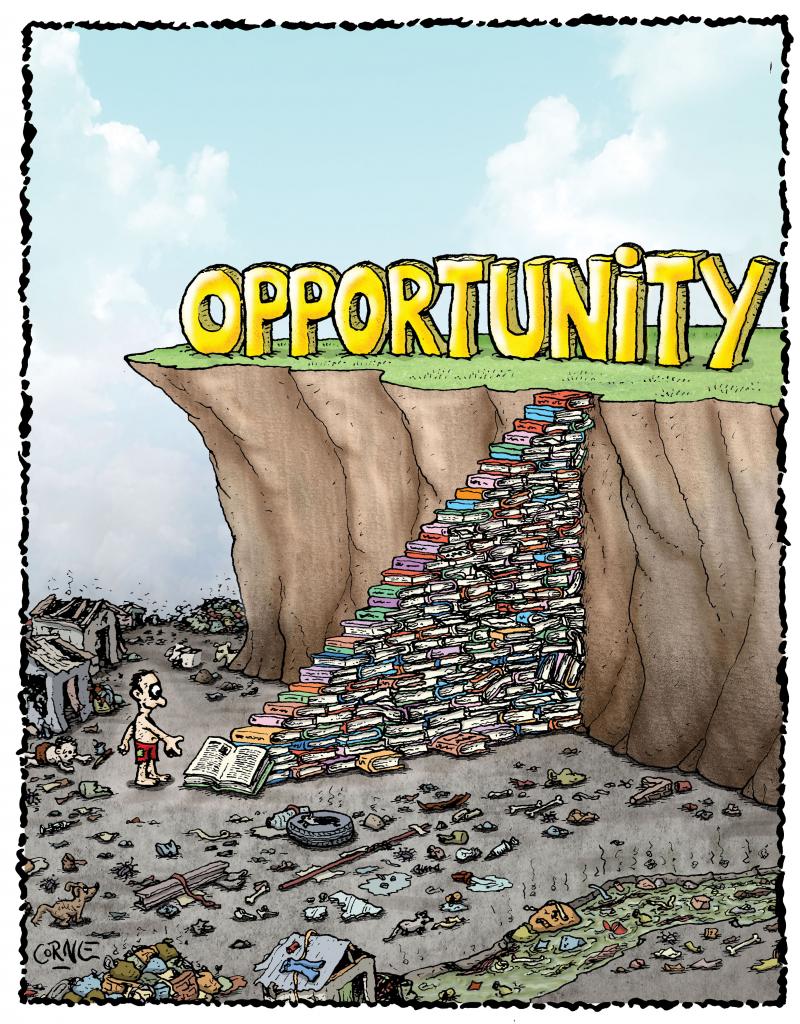
The Power of Education in Promoting Human Rights – Empowering Generations for a Just Future

Human rights are the fundamental freedoms and protections to which every individual is entitled, regardless of their background or circumstances. While progress has been made in advancing human rights across the globe, numerous challenges continue to persist. One crucial avenue for promoting and protecting human rights is through education, particularly the education of young people. Education equips individuals with the knowledge, critical thinking skills, and empathy needed to champion human rights causes and effect positive change within the society they will shape.

Education is more than just the acquisition of knowledge; it is a powerful tool that empowers individuals to understand and defend their thoughts, feelings, and rights. By equipping individuals with the knowledge of their rights and the skills to articulate and advocate for them, education provides a platform for empowerment. It enables individuals to challenge discrimination, inequality, and social injustices. Moreover, education cultivates critical thinking abilities that allow people to question prevailing norms, challenge oppressive systems, and envision a more equitable society, preparing them to be the facilitators of the new generation of thinkers and agents of change.

Education plays a pivotal role in fostering tolerance and respect for diversity, key principles of human rights. Through exposure to different cultures, beliefs, perspectives, and historical atrocities, education promotes empathy and understanding. By teaching students about the importance of respecting and valuing the dignity of all individuals, regardless of their race, religion, gender, sexuality, disability, age, marriage status, or socio-economic background, education helps to break down barriers and prejudices. It encourages students to embrace diversity and cultivate inclusive mindsets, preparing them to be compassionate global citizens from an early age – Instilling these critical thought processes from an early age is vital to preventing entrenched prejudice later in life.

Education serves as a potent weapon in combating discrimination and inequality. It empowers individuals to challenge discriminatory practices, policies, and attitudes. By promoting equal access to education for all, regardless of their social or economic status, education becomes a catalyst for positive social change. It provides opportunities for marginalised, minority, and misunderstood communities and helps break the cycle of poverty, exclusion, and discrimination. Moreover, education that highlights the experiences and struggles of historically marginalised groups helps to create awareness and dismantle systemic discrimination.

Integrating human rights education into the curriculum is not only crucial but also practical for fostering a culture that respects and upholds human rights. By incorporating human rights principles and values into various subjects, schools can provide students with the necessary tools to become advocates for human rights. For example, in social studies, citizenship, and history classes, students can learn about the Universal Declaration of Human Rights, UN Convention on the Rights of Children, ECHR, study historical human rights movements, and analyse real-world examples of human rights violations. Literature and language arts classes can explore works that highlight themes of social justice and equality or focus on works which have been censored or created from a system of oppression such as the Diary of Anne Frank, sparking discussions on human rights issues. Science classes can examine ethical considerations surrounding scientific advancements and their impact on human rights. Mathematics classes can delve into statistical analyses of inequalities and disparities, fostering critical thinking about social and economic rights. By infusing human rights education across disciplines, schools can create an integrated and comprehensive approach that empowers students to understand, analyse, and address human rights challenges in their communities and beyond and make these issues a part of the normal and everyday conversation, rather than the occasional issue.

Teaching young people about human rights principles from a young age is crucial. Childhood and adolescence are formative periods where attitudes, values, and beliefs are shaped. By introducing human rights concepts early on, we can instil in young minds the understanding that every individual has inherent dignity and deserves equal rights and respect. It helps them develop a strong moral compass and empathy for others, fostering a culture of tolerance, inclusion, and social cohesion.

Young people are the future leaders, policymakers, and advocates of our world. By educating them about human rights, we empower them to become agents of change, actively working towards a more just and equitable future and we encourage the shaping of a society that best benefits all. When young people are aware of their rights and understand the importance of respecting the rights of others, they are more likely to challenge injustices and contribute to positive societal transformations. They become the driving force behind progress in areas such as gender equality, racial justice, environmental sustainability, and much more.

Furthermore, teaching human rights from a young age helps prevent the perpetuation of discrimination and prejudice. It equips young people with the tools to critically examine societal norms, challenge stereotypes, and confront biases. By promoting inclusivity and respect for diversity, human rights education lays the foundation for a society where all individuals can thrive and contribute their unique perspectives and talents.

In a rapidly changing world, where human rights issues persist and new challenges emerge, it is crucial that young people are prepared to navigate complex ethical dilemmas and actively engage in shaping a more just society. By instilling a deep understanding of human rights principles, we equip young people with the necessary skills to become compassionate leaders, capable of building bridges, fostering dialogue, and advocating for the rights of all individuals.

Education is a catalyst for change, offering individuals the knowledge, skills, and empathy needed to champion human rights. By empowering individuals, fostering tolerance and respect, combating discrimination, and integrating human rights education in schools, we can create a society that upholds and protects human rights. As we strive for a more just and equitable world, investing in education becomes paramount. We must recognise the transformative power of education and work collectively to ensure that every individual has the opportunity to learn, grow, and contribute to the realization of a world where human rights are upheld and valued by all.

Part of the Vision of the NRI is a world where all people have a comprehensive understanding of their rights and liberties, the legal system and principles of justice. This starts with the education of our youth.


Avaia Williams – Founder

This blog was published on 17 June 2023

Happy Third Birthday to the Open Justice Court of Protection Project

openjusticecourtofprotection's avatarPromoting Open Justice in the Court of Protection

By Celia Kitzinger, Gill Loomes-Quinn, Claire Martin and Kirsty Stuart, 15 June 2023

Three years ago today, on 15thJune 2020, Celia and Gill launched the Open Justice Court of Protection Project, at the beginning of the COVID-19 pandemic.

It was born of our passionate belief that “publicity is the very soul of justice” at a time when it seemed that the public health emergency was closing down the opportunity for people to observe the court in action.

When the COVID-19 public health emergency first began in March 2020, Court of Protection hearings moved from physical courtrooms to ‘remote’ hearings via telephone and video-platforms.  For months, Celia had been supporting “Sarah” through the decision-making process about whether life-sustaining treatment was in her father’s (P’s) best interests. It had just reached court – and it turned out to be the first all-remote hearing of the pandemic. It was a…

View original post 1,953 more words