Charlie Kirk – Free Speech and Violence

On 10 September 2025, Charlie Kirk was shot dead while addressing a crowd at Utah Valley University. A single bullet from a rooftop ended his life in an instant, bringing a violent close to one of the most divisive voices in American political life. His alleged killer has since been arrested, and the facts of the case will play out through the criminal courts. Yet the meaning of what happened extends beyond one man and one crime. It strikes at the heart of what it means to live in a society that claims to value human rights and freedom of expression.

There is no need to pretend that Kirk’s views were not often offensive and harmful. His politics were abrasive and frequently exclusionary, his rhetoric scornful of communities already marginalised. For many of us who hold human rights as a universal entitlement, not a privilege, what he said seemed antithetical to the very concept of equality and dignity. His words could wound, legitimise prejudice, and make life harder for those who already face discrimination. And yet, no matter how repellent we might have found his message, the manner of his death should disturb anyone who values the principles of a free society.

The killing of someone because of their words is an attack not only on that individual but on the very bedrock of rights that allows us to live together despite profound disagreements. At its core, human rights mean that we resolve our disputes without violence, that we answer words with words, that we rely on reason, law, and persuasion rather than force. When someone is silenced with a gunshot rather than with argument, we lose more than a life, we lose a piece of our collective commitment to live by rights rather than by fear. It cannot be ignored that Kirk’s speech likely incited division, possibly even violence, but it equally cannot be ignored that the position often ran by the opposite of Kirk can be said to do the same.

What makes Kirk’s death especially poignant in this respect is that he never shied away from confrontation. He thrived on challenge, he invited debate, and he exposed his ideas to the public square, for better or worse. That willingness to defend a position openly, to risk being questioned and rebutted, is a quality that should be cherished even when we deplore the substance of the argument. The free exchange of ideas is the bedrock of progress. It is messy, often uncomfortable, and inevitably painful when the ideas being traded feel like a denial of one’s own humanity or to be told that one is worthless, crazy, or inhuman. But it is the alternative to violence, and it is what gives us the chance to persuade, to change, or to resist without descending into bloodshed.

The famous adage comes to mind, I may not agree with what you say, but I will defend your right to say it. This does not mean that all speech is beyond criticism, nor that the harms of speech should be minimised. Quite the opposite, it is precisely because speech matters, because it has consequences, that we must defend the principle of countering harmful ideas with more speech, better speech, and stronger arguments. To give in to the idea that a person may be killed for their views is to abandon human rights themselves, to replace it with a politics of vengeance rather than dialogue. This was recognised some 50 years ago by the European Court of Human Rights in Handyside v UK [1976] ECHR 5, where the Court stated:

“Freedom of expression … is applicable not only to ‘information’ or ‘ideas’ that are favourably received or regarded as inoffensive or as a matter of indifference, but also to those that offend, shock or disturb the State or any sector of the population.”

There is, of course, no single correct worldview. For every person repelled by Kirk’s beliefs, there were others who shared them, just as sincerely as you may hold your beliefs dear. That too is part of the reality of pluralistic society – we will never arrive at a moment when one set of ideas can be announced as final and universally binding, or at least the same is highly unlikely. The task is not to erase disagreement but to learn to live with it, to regulate it within the boundaries of law and rights, and to ensure that no one is stripped of life or liberty for holding views others despise.

The killing of Charlie Kirk is senseless in every sense of the word. It has deprived his family and supporters of a son, a husband, a leader. It has deprived his opponents of the chance to keep challenging him, to prove him wrong, to demonstrate that his vision was not the only one. It has deprived society of the opportunity to show that ideas, however poisonous, can be confronted without resorting to violence. Human rights do not exist only for those we admire, but also for those we reject. To forget that is to hollow them out until they are no longer rights at all, but privileges dispensed to the few.

History shows us the devastating consequences of going down that road. When societies abandon the principle of free expression and permit violence to silence dissent, what follows is rarely justice but tyranny. The most notorious example remains the Third Reich, where opposition voices were systematically eliminated, political parties dissolved, independent media crushed, and ordinary people cowed into silence by the threat of imprisonment or death. The result was not a society free from harmful ideas, but one consumed by them, where hatred and violence became state policy, unchecked by criticism or debate.

Other authoritarian regimes, past and present, follow the same grim pattern. The Soviet Union under Stalin, Pinochet’s Chile, Franco’s Spain, and more recently authoritarian governments that imprison journalists or suppress protest, all demonstrate that silencing opposition by force does not create peace or truth. Instead, it corrodes the very possibility of human rights, because when speech is extinguished, accountability disappears with it.

As we reflect on this killing, we should recommit to the principle that debate, not destruction, is the only acceptable answer to speech. The measure of a rights-respecting society is not how it treats those whose voices we welcome, but how it protects the right to speak of those we would rather not hear. Charlie Kirk chose to speak openly and to face his critics in public.

That choice should have been met with arguments, protests, and rebuttals – not with a bullet.

Avaia Williams – Founder

This blog was published on Friday 12th September 2025

When the Dead Are Put on Trial

Le Pape Formose et Étienne VI, Jean-Paul Laurens, 1870

We like to imagine that death is the end of things. The body rests, the disputes settle, and history quietly moves on. But again and again, societies have shown themselves unwilling to let their dead lie undisturbed. Corpses have been exhumed, reputations retried, and sentences delivered long after the grave was sealed. The dead may not answer back, but the living still find reasons to judge them.

Take Pope Formosus. In 897 CE, several months after his death, his enemies decided that he hadn’t suffered enough. He was exhumed, dressed once more in papal robes, and seated upright on a throne in the Basilica of St John Lateran. His successor, Pope Stephen VI, was determined to obliterate Formosus’ legacy. A deacon was appointed as defence counsel, though what defence could possibly be mounted on behalf of a decomposing body?

The charges were as muddled as they were political — perjury, illegally becoming Pope, violations of canon law. Unsurprisingly, the verdict was guilty. But Stephen wanted more than a legal judgment; he wanted humiliation. Formosus’ papacy was declared null and void, his acts annulled, his blessing fingers hacked off, and his body dragged through the streets before being dumped in the River Tiber. It was supposed to erase him. Instead, it scandalised Rome. Within a year, Stephen was overthrown and strangled in prison, and later Popes tried to restore Formosus’ reputation. Yet the macabre theatre of the Cadaver Synod has lingered as one of the most grotesque episodes in legal history…the literal trial of a corpse.

Leap forward nearly eight centuries, and England had its own variation on the theme. Oliver Cromwell, the man who led a revolution, executed Charles I, and ruled as Lord Protector, died in 1658. But when Charles II returned to the throne in 1660, the monarchy wasn’t content to let Cromwell rest. He was beyond earthly punishment — yet not beyond symbolic justice. Parliament ordered his body exhumed. In January 1661, Cromwell’s corpse was taken to Tyburn, ritually hanged, then beheaded. His head was placed on a spike outside Westminster Hall, where it remained for almost three decades, battered by wind and rain, before disappearing into private collections. The head was finally buried at Sidney Sussex College at Cambridge in 1960. Cromwell’s remains had been reduced to theatre, but the message was clear: the Restoration wanted to show that rebellion could not survive, even in memory. His body was punished as a warning to the living.

The story takes a different turn with Alan Turing. Unlike Formosus and Cromwell, Turing wasn’t disinterred, mutilated, or displayed. His trial came in life, not death. He was convicted in 1952 of “gross indecency” for being a gay man, he was offered prison or chemical castration. He chose the latter and died two years later, widely believed to have taken his own life. For decades, Britain ignored its debt to him — the man who cracked the Enigma code and helped shorten the Second World War, saving countless lives. Only in 2013 did the state finally act, issuing him a royal pardon. Unlike Formosus and Cromwell, this was not condemnation but absolution. Yet the effect is much the same; long after his death, Turing’s legacy was retried by the living, his memory judged once more. The pardon said as much about the state as it did about him, an admission that the law had been cruel, and that Britain had failed one of its greatest minds.

What ties these stories together is the uncomfortable truth that death does not shield anyone from judgment. The law, politics, and morality all reach into the grave. Sometimes this takes the form of grotesque theatre, like a Pope’s corpse dragged into court. Sometimes it is vengeance dressed up as justice, like Cromwell’s head on a spike. And sometimes, as with Turing, it is an attempt at restoration — a symbolic apology, offered too late for the person it concerns.

The dead cannot defend themselves. They cannot feel shame, or vindication, or relief. Posthumous trials are really about the living and about how we choose to remember, how we settle our scores, and how we rewrite the past to suit the needs of the present. In that sense, they never really stop happening. Every time a statue is pulled down, a knighthood rescinded, or a pardon granted, we see echoes of Formosus, Cromwell, and Turing. The trial of the dead is not a relic of history. It is part of how societies tell stories about themselves — sometimes grotesque, sometimes redemptive, always revealing.


Avaia Williams – Founder

This blog was published on Saturday 16th August 2025

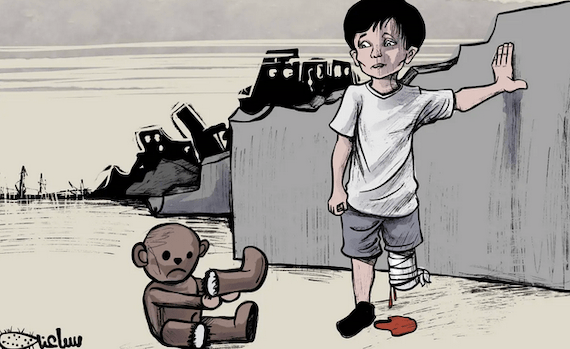
The Forgotten Casualties of War – Children in Conflict Zones

Sabaaneh / Middle East Monitor

A toy dump‑truck lies half‑buried in rubble outside what used to be a nursery in northern Gaza. Eight hundred kilometres away, faded chalk drawings still cling to the bomb‑scarred walls of a primary school in Kharkiv. The details differ, but the story is the same, wherever adults wage war, children inherit the ruins.

The United Nations verified 41,370 grave violations against children in armed conflicts during 2024 alone. a figure so large it hurts just to process, yet each number has a name, a personality, and an abruptly altered future.

The Gaza Strip offers one of the starkest portraits. Since 7 October 2023, UNICEF reports more than 50,000 Palestinian children have been killed or injured, the report noting:

“How many more dead girls and boys will it take? What level of horror must be livestreamed before the international community fully steps up, uses its influence, and takes bold, decisive action to force the end of this ruthless killing of children?”

Hospitals turned field camps struggle to do more than triage given antibiotics run out before the bandages. A starkly reported statistic reveals that, in Gaza, there are more child amputees than anywhere else on earth, meaning that instead of reaching for toys, crayons, or textbooks, toddlers are waking after surgery and reaching for legs that are no longer there. The psychological picture is just as damaging, research from Mohsen Khosravi summarising that:

“These children often endure a range of traumatic experiences, including witnessing violence, losing family members, and being forcibly displaced from their homes. Such experiences can lead to a variety of psychological issues, including post-traumatic stress disorder, depression, anxiety, adjustment disorders, psychosomatic symptoms, behavioral problems (e.g., aggression, withdrawal, and difficulties in social interactions), suicidality, and developmental delays.”

Yet with only around 30 psychiatrists in occupied Gaza, and no functioning mental health centres remaining, the emotional future of the children of Palestine has likely already been failed.

Cross the Black Sea to Ukraine and the landscape changes, but the hazards remain familiarly lethal. A report from the UN Human Rights High Commissioner reveals that children in the annexed regions of Ukraine have faced significant violations, including summary execution, sexual violence, torture and forced transfer. The same report lists that 669 children have been killed and 1,833 injured between February 2022 and December 2024; recent missile salvos have pushed this figure even higher.

Families flee east and west in great waves, with UNICEF reporting that some 4.3 million children being displaced within the first month of the war, almost 2 million of those becoming refugees. As part of the ICC warrant issued in 2023, charges of deportation and unlawful transfer of children from Ukraine to Russian were laid.

Inside Ukraine, Save the Children notes that three years of full-scale war has shattered the lives of children, reporting that:

“Three years of full-scale war in Ukraine has shattered children’s lives. Their childhoods have been ripped away as they’ve been forced from their homes and schools, lost loved ones and friends and lived in fear as air raid alerts, drones and explosions consume the world around them. From children living on the frontline of the war to those who have been displaced from their homes, the scale of loss is catastrophic.”

Numbers can obscure the lived texture of such childhoods, paradoxically so when those numbers move into the tens of thousands. Liliana, an 18-month old baby was presented dead to US doctors in Gaza, a bullet wound to her temple. Mira Abd Radwan (0) had not even reached her first birthday, Ayla Abu-Al-Aish (1) was unable to take her first steps, Saeed Al-Ramlawi (4) never got to reach pre-school and Aisha Al-Shawa (11) survived three wars before falling in the fourth – these are not even a fraction of the 11,500 currently listed on Al Jazeera’s “Know Their Names” page.

Twins Denys and Nikol Deineko (1) left the world as they came in to it, together, and Liza Dmytriieva (4) was killed in an airstrike whilst walking with her play pushchair. Alisa Perebyinis (9) will never see her tenth birthday due to Russian mortars and Rostyslav Pichkur (13) had only recently reached his teens before being targeted by a T-72 tank; these being just four stories shared by families in Ukraine.

International law, on paper, could not be clearer. The Convention on the Rights of the Child demands that states protect children from violence and guarantee access to health care and education. The Rome Statute empowers judges in The Hague to prosecute commanders who deport children or shell playgrounds. More than 120 countries have endorsed the Safe Schools Declaration, committing to working together to safeguard schools from military use and target during conflict. Israel and Russia remain notable hold‑outs, and signatures, in any case, are only as powerful as political will makes them.

Yet even amid diplomatic stalemate, interventions can change trajectories. Providing windows of relative calm, whether a week‑long humanitarian pause or a specific corridor agreement, allows surgeons to perform complex reconstructions, prosthetists to fit growing bodies with adjustable limbs, and counsellors to teach families basic coping skills. The lesson is brutal but straightforward: access saves lives.

What happens once the guns fall silent? History suggests the wounds of childhood outlast the treaties that end wars. Maja Pašović, who was only five when the war in Bosnia broke out, spoke out at the start of the 2022 Russian invasions, stating:

“For child survivors, including me, the collective trauma that armed conflicts wreak upon a population can take years to heal. For many, these wounds never heal. Countless people from my hometown and my generation have never escaped the emotional scars of war, not to mention the other damages it inflicted on them by restricting their access to education, social bonding, and health care. When I remember my schoolmates and neighbors from Sarajevo, I often wonder how many of them are reliving this trauma of war, a war that may have detrimental impacts globally, if peace and stability are not realized soon.

Healing the traumas of war is a continuous and difficult process, requiring years of work, patience, and perseverance.”

Shielding children from war cannot wait for peace treaties; it requires a chain of safeguards stretching from the battlefield to the negotiating table and back. It starts with ceasefire deals that put children’s safety—medical evacuations, food convoys, power for incubators—on equal footing with territorial demands. It continues with budgets that reserve real, traceable money for rebuilding classrooms, fitting prosthetics and training counsellors, because recovery is impossible if children grow up ill, uneducated or traumatised. It is reinforced by investigators who document every shell crater and forced deportation so that future courts can speak for victims too young to testify today. And it matures when every army, rebel group and security force treats schools and hospitals as off‑limits.

All of this costs money and, more critically, political capital. But the alternative future is much more costly and results in a future in which today’s traumatised children rebuild their broken cities only to inherit their parents’ grievances. Measured by that, Gaza and Ukraine indict us all. The rubble outside a nursery and the chalk ghosts on a classroom wall are not only symbols of loss but also of a promised better world. Whether that promise is renewed or abandoned will depend on choices made far from any frontline, in conference halls where children have no voice.

We owe them more than a place on someone else’s agenda; we owe them the right to live a childhood unpunctuated by sirens.

Postscript – Beyond Gaza and Ukraine

The wars examined above are only two threads in a far wider tapestry of violence that frays childhood around the globe. In Sudan, renewed fighting in Darfur and Kordofan has uprooted nearly seven million children and placed entire towns under siege. Across West Papua, children are regularly targeted with claims of being guerrilla rebels. Syria’s boys and girls face a second decade of war amid collapsing health systems and playgrounds littered with unexploded ordnance. In Myanmar, thousands of children have been recruited as soldiers with over 2000 grave violations committed. Protracted crises in Yemen, Ethiopia’s Tigray, the DRC, and gang‑violence‑torn Haiti generate equally grim tallies of malnutrition, displacement and lost schooling. Every one of these conflicts echoes that, when adults fight, children lose.


Avaia Williams – Founder

This blog was published on Saturday 19th July 2025

Pregnant Urination, Suspicious Salmon, and Polish Potatoes: Eight More Absurd Legal Myths and Truths from the UK

Britain’s legal landscape is a patchwork of ancient statutes, obscure royal prerogatives, and the occasional modern oddity. Combined with a healthy dose of internet folklore and pub logic, it’s no surprise that some strange “laws” have cemented themselves as fact in the public imagination. But which are genuine curiosities left on the statute books – and which are pure legal fantasy?

Here are eight more laws and myths to make you question everything you thought you knew about British justice.

A policeman must give a pregnant woman his hat to urinate in – FALSE

One of the most quoted urban legends of British law, this myth suggests that pregnant women have a legal right to relieve themselves in a police officer’s helmet. Which would surely come as a concern to any local bobby!

While it may be a comforting thought for those caught short, there’s no legislation or case law that gives such a right. There are no laws specifically allowing this, nor is there any enforceable rule that compels police officers to hand over their helmets.

It was rumoured that a clause to this effect was once proposed during the drafting of the Criminal Justice and Police Act 2001, but it was never passed. And while urinating in public may be dealt with under local bylaws or public order offences, there’s certainly no statutory exception for expectant mothers — or police headgear.

It is illegal to import Polish potatoes – TRUE

Believe it or not, it is still an offence to import Polish potatoes into England without notifying the authorities, thanks to the wonderfully specific Polish Potatoes (Notification) (England) Order 2004.

This Order was enacted due to ring rot, a serious potato disease found in parts of Poland at the time. While many assumed Brexit would sweep away this spud-based statute, it remains on the books.

So, unless you fancy a fine with your pierogi, make sure you fill in the proper forms before bringing Polish potatoes across the border.

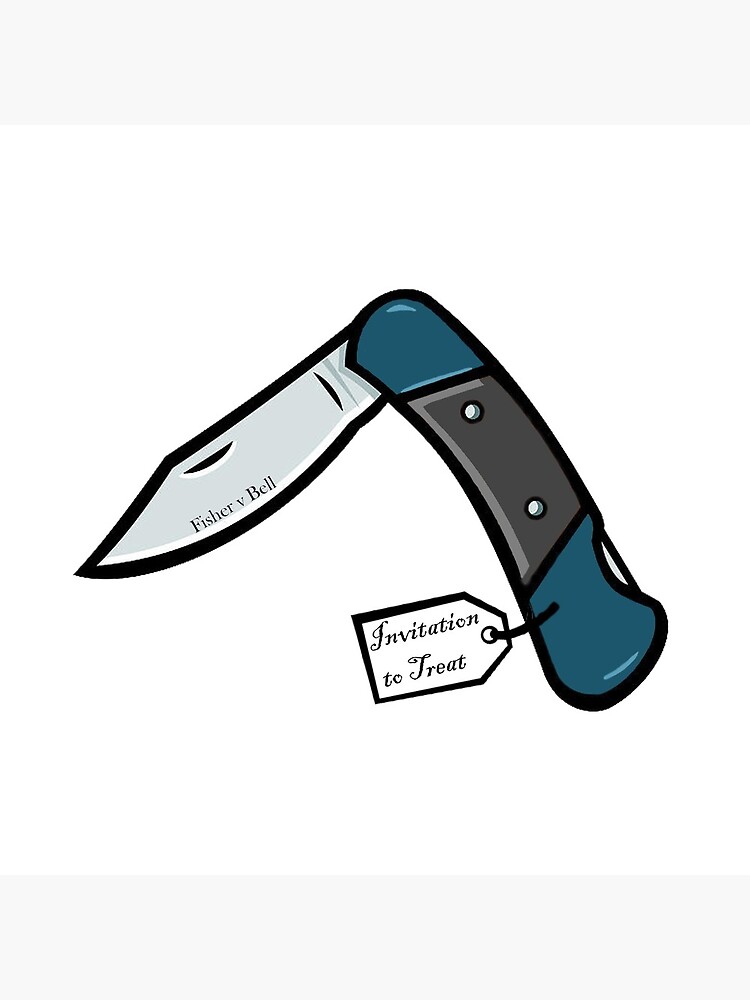
A shop must sell you an item at the price on the label – FALSE

It feels like a breach of trust when an item on the shelf is priced at £1 but scans at £10 — surely the law says they must sell it to you at the lower price?

In reality, they don’t. The key legal principle here comes from contract law. Price labels in a shop are considered an invitation to treat, not an offer. The classic case is Fisher v Bell [1961], where a shopkeeper displaying a flick knife in a window wasn’t deemed to be making an offer for sale (and thus committing an offence(. You, the customer, make the offer when you bring the item to the till, and the shop is free to accept or decline it.

So, while it may feel unfair, shops are under no legal obligation to sell an item for the incorrectly labelled price — though many do so voluntarily as a goodwill gesture.

All beached whales belong to the King – TRUE

It may sound like an eccentric monarch’s wish, but this one’s enshrined in ancient law. Under s.13 of the Prerogativa Regis 1322, whales and sturgeons — termed “royal fish” — belong to the sovereign when found on the British coastline.

The rationale? These large and rare creatures were considered valuable and symbolic. Even today, technically, if a whale washes ashore in the UK, the Receiver of Wreck (a real job currently held by Steve White) must be notified, and the whale is the property of the Crown.

So if you’re thinking of harvesting blubber from the beach, then beware of the King’s fishery rights.

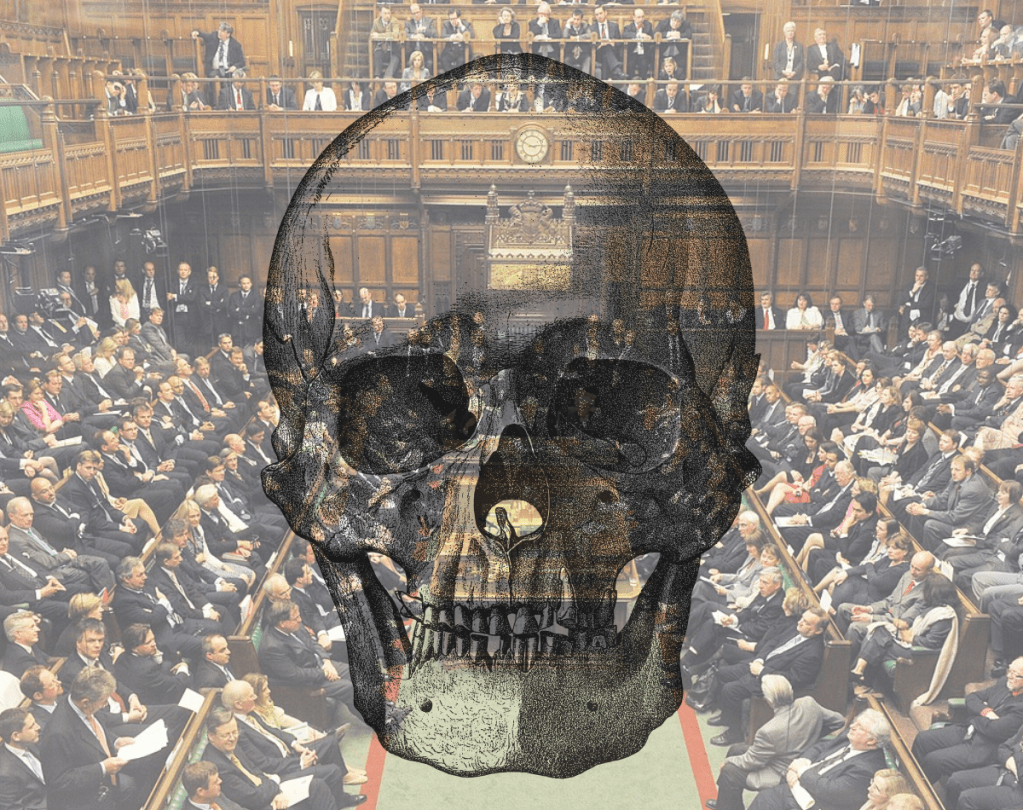
It is illegal to die in Parliament – FALSE

This one regularly tops lists of “bizarre British laws”: that it is an offence to die in the Palace of Westminster, and that anyone who does must be granted a state funeral.

Unfortunately (or perhaps fortunately), this is complete nonsense. There is no law making it illegal to die in Parliament. In fact, several notable individuals have died on the premises over the centuries, including Welsh Minister Michael Roberts and Lord Montague of Oxford.

The likely origin of the myth is the idea that Parliament is a “royal palace,” and thus carries some peculiar privileges. But death, a decidedly non-legislative event, remains stubbornly lawful wherever it occurs, least of all because it would be impossible to punish.

It is illegal to be homeless – TRUE

It sounds harsh, and it is, which is why this law is intended to be repealed soon. Under section 4 of the Vagrancy Act 1824, it is still technically a criminal offence to sleep rough or beg in a public place.

Originally introduced to tackle the aftermath of the Napoleonic Wars and mass demobilisation, the Act criminalised the “idle and disorderly.” Although largely obsolete in practice, it has been used in recent years to target people sleeping rough prompting calls for its repeal.

Despite widespread condemnation from homelessness charities and MPs, the law remains in force in England and Wales (though it’s been repealed in Scotland).

Paying council tax makes you liable for terrorism – FALSE

If you’ve ever stumbled into the murky world of “Freeman of the Land” YouTube videos, you’ll know this argument well. Proponents claim that paying council tax binds you to government acts of terrorism, or that consent is required to be governed at all.

These arguments are legally meaningless. The idea that statutory law requires individual consent misunderstands how parliamentary sovereignty works. Council tax liability arises from statute, particularly the Local Government Finance Act 1992, and courts routinely dismiss pseudo-legal defences based on “Freeman” ideology.

So no, you’re not financing terrorism when you pay council tax, you’re just making sure your bins get collected – with some Councils releasing specific guidance on this topic.

It is an offence to handle salmon suspiciously – TRUE

A law that sounds made up — but isn’t. Section 32 of the Salmon Act 1986 creates the offence of “handling salmon in suspicious circumstances.” It also applies to ells, trout and lampreys.

Originally intended to combat black-market fish trading, the law is still on the books. It applies when someone receives or disposes of salmon they reasonably suspect has been illegally fished.

So, if you’re lurking around a fishmonger with a shifty expression and a bag full of haddock, you may not be in immediate danger unless it’s actually salmon and the circumstances are, indeed, suspicious.


British law is full of quirks, curiosities, and occasionally confusing myths. Some, like the salmon clause or Polish potato ban, are genuine remnants of niche legislative concerns. Others are simply fiction repeated until believed.

In any case, it’s worth checking the statute book before repeating legal “facts” at your next pub quiz – or before attempting to discharge a cannon or drive cattle through the streets of London as explored in our first myths and odd laws article.


Avaia Williams – Founder

This blog was published on Friday 11th July 2025

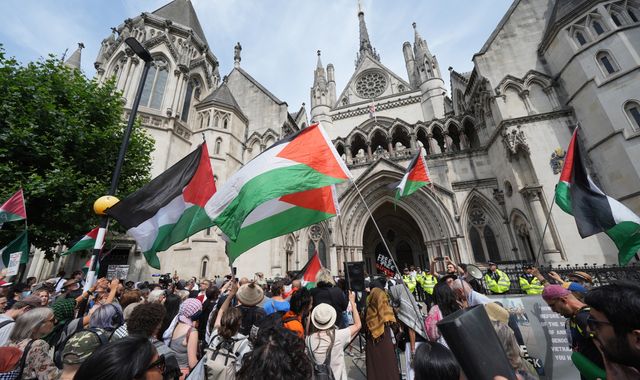
Protest is Not Terrorism – The Criminalisation of Palestine Action

Palestine Action formed in 2020 as a direct action network targeting UK companies and institutions complicit in the Israeli arms trade. The group is most known for its campaign to shut down factories owned by Elbit Systems, Israel’s largest private weapons manufacturer, whose technologies have been used in the Israeli military’s bombardments of Gaza.

Palestine Action’s methods are unapologetically disruptive and include occupying arms factories, scaling buildings, disabling machinery, spraying symbolic red paint to represent bloodshed, and blockading supply chains. Activists see their actions as morally necessary civil disobedience in the face of ongoing war crimes and ethnic cleansing in Gaza.

The group does not advocate violence against persons. Rather, it targets property and infrastructure involved in the manufacture and delivery of military equipment, with the stated aim of halting the UK’s complicity in the genocide being committed against the Palestinian people in Gaza and the Occupied West Bank.

Why are PalAction Being Proscribed?

On 20 June 2025, Palestine Action activists accessed RAF Brize Norton, a military airbase in Oxfordshire. There, they reportedly caused significant disruption, including spraying red paint into the engines of two RAF Voyager aircraft, allegedly worth £250m. The damage was estimated reported at £7 million (though one of the aircraft was reported to have been in the air only a few days later). The group stated these aircraft were being used to supply arms and logistical support to the Israeli Defence Forces (IDF), and that their action was part of an effort to disarm genocide.

The Home Secretary, Yvette Cooper, used this incident to fast-track an application to proscribe Palestine Action under the Terrorism Act 2000, arguing that the group endangers national security and is committed to criminal damage, serious disruption and dangerous trespass. In introducing the Proscription, the Home Secretary reported that:

“Palestine Action’s online presence has enabled the organisation to galvanise support, recruit and train members across the UK to take part in criminal activity and raise considerable funds through online donations. The group has a footprint in all 45 policing regions in the UK and has pledged to escalate its campaign.”

Legal Implications

On 4 July 2025, Palestine Action’s legal team brought an urgent challenge to the High Court, seeking interim relief to pause the proscription. The challenge argued that banning a protest group under terrorism law was unlawful, disproportionate, and a grave infringement on democratic freedoms.

However, the High Court dismissed the application for interim relief, paving the way for the ban to take legal effect on 5 July 2025. The group is understood to be preparing to appeal the ruling and will pursue a Judicial Review of the Home Secretary’s decision later this month. The groups barrister, Raza Husain KC stated that:

“This is the first time in our history that a direct action civil disobedience group, which does not advocate for violence, has been sought to be proscribed as terrorists,”

From Saturday 05 September 2025, the group will officially be a Proscribed Group. Under the Terrorism Act 2000, it will thereafter be a criminal offence to:

  • Belong to Palestine Action
  • Invite support for Palestine Action
  • Express support for Palestine Action, including in speech or writing
  • Arrange meetings to support Palestine Action or its aims
  • Display articles, such as logos, banners, or symbols indicating support for Palestine Action

The penalties for a breach includes up to 14 years in prison, this is the case even for entirely non-violent or disruptive forms of expression, including on social media – in fact, blog posts such as thus, under some stringent interpretation could be argued to be a breach (though it would be strongly resisted this is the case, this is part of the danger in these laws, the lines become blurred).

The Terrorism Act defines terrorism broadly to include “serious damage to property” where the use of force is designed to influence government or intimidate the public. It allows for proscription where the Secretary of State believes an organisation is “concerned in terrorism”—a threshold many argue is dangerously low when applied to political protest.

Protest not Terrorism

The proscription of Palestine Action is deeply alarming. It marks the first time a UK protest group – with no record of violence against individuals – has been banned under terrorism legislation. This is not just an escalation; it is a radical redrawing of the boundary between protest and terrorism.

Property damage, even significant, has long been part of civil disobedience traditions, from the Suffragettes to anti-apartheid activists. Palestine Action has always made clear that their target is the infrastructure of arms production – not people. To put it this way, if such direct action had been banned since time immemorial, then women would not have the right to vote, children would still be working in dangerous conditions, and apartheid would be rife in South Africa.

To conflate these acts with terrorism is to criminalise dissent. It silences voices standing in solidarity with the people of Gaza, where over 50,000 Palestinians have been killed since October 2023, the majority of them women and children. Entire neighbourhoods have been levelled, hospitals bombed, and food supplies cut. The International Court of Justice has stated that Israel’s actions may plausibly amount to genocide.

While many see the issue in Palestine as starting in October 2023, the violence of occupation and apartheid stretches far beyond this current moment. What we are witnessing is not a sudden crisis, but an escalation of a systemic and long-standing campaign of dispossession.

Since 1948, when more than 750,000 Palestinians were forcibly displaced during the Nakba, Israel has pursued a policy of expansionism and demographic engineering. This has included the illegal annexation of East Jerusalem, the construction of a separation wall condemned by the International Court of Justice, and the rapid growth of Israeli settlements in the occupied West Bank – settlements that are unequivocally illegal under international law.

More than 700,000 settlers now live in these enclaves, protected by a dual legal system that discriminates between Jewish settlers and the Palestinians whose land they occupy. Palestinian homes are routinely demolished. Communities are displaced under the guise of “security” or “zoning violations.” Gaza, meanwhile, has been subjected to a crippling blockade since 2007, turning it into what human rights organisations have described as the world’s largest open-air prison.

This is not a “conflict” between equal sides. It is a decades-long regime of apartheid and ethnic cleansing – documented in detail by groups such as Amnesty International, Human Rights Watch, B’Tselem, and the UN Special Rapporteur. To protest this system, and to directly disrupt the arms companies enabling it, is to stand on the side of international law and human dignity.

In this context, activists who take non-lethal direct action to halt the machinery of destruction should not be treated as terrorists. They should be recognised as part of the global movement against war crimes and apartheid.

Solidarity Opposed to Silence

This ban is not just about Palestine Action. It is about the future of protest in the UK. If the state can designate a protest group as terrorist for damaging property in pursuit of a just cause, who is safe? Whenever protest rights are discussed, it is so important to remember that the rights which give people the ability to dissent and oppose one group’s voice, is the right which gives that group the voice.

The Nightingale Rights Initiative stands firmly against this proscription and in solidarity with all those acting to stop genocide, apartheid, and arms profiteering. We reject the framing of resistance as terrorism and call for the repeal of this designation.

The right to protest must not become collateral damage in the UK’s complicity with Israel’s war on Gaza.


Avaia Williams – Founder

This blog was published on Monday 4th July 2025

The Rising Tide of Mental Health Sick Leave: UK and Germany

Mental health, often described as the emotional, psychological, and social well-being of an individual, is essential for navigating daily life with resilience and purpose. It includes our thoughts, feelings, and behaviors, influencing how we make choices in many aspects of our lives. Notably, mental health is not merely the absence of mental illness; it represents a state of well-being that allows us to realise our potential, cope with normal stresses, and contribute meaningfully to society.

In recent years, various issues have been rising in number, related with the burn-out state that people from all over the world have been experiencing. Additionally, it is very important to stress that mental health problems do not necessarily mean permanent illnesses nor should they be turned into judgemental information on someone’s capabilities and expertises.

The Importance of Mental Health in the Workplace

In the context of work, where a significant portion of our waking hours are spent, maintaining good mental health is paramount for overall productivity, job satisfaction, and organisational success. The impact of mental health on workplace dynamics, employee performances, and organisational culture emphasises the critical need for employers and policymakers to prioritise mental well-being as a fundamental aspect of occupational health and safety.

Poor mental health can lead to reduced employee engagement, increased absenteeism, and higher turnover rates. Studies show that employees experiencing high levels of stress are more likely to make mistakes, which can impact overall business performance. Moreover, the economic cost of mental health issues is substantial; for instance, the World Health Organisation estimates that depression and anxiety cost the global economy approximately $1 trillion annually in lost productivity.

Promoting mental well-being at work also fosters a positive organisational culture, enhancing team morale and improving communication. Companies that invest in mental health initiatives often see a return on investment through reduced healthcare costs and improved employee retention. Furthermore, supporting mental health can enhance creativity and innovation, as employees who feel supported are more likely to contribute new ideas and engage fully with their work. In essence, prioritising mental health in the workplace is not only a moral imperative but also a strategic business decision that can lead to a more resilient and thriving workforce. Along with these corporate strategies which workplaces can implement, it is always an option to regularly check if a regular working day at workplaces go through in a harmonious, respectful and non-eventful manner. It is an undeniable truth that some workplaces themselves put high pressure on their employees, intentionally or unintentionally creating a stressful atmosphere with the agenda that this can turn into statistical gain of some sort. This aim, and lack of considerateness, can, in most cases, be the very reason why employees experience and/or feel high density mental/psychological issues.

Global Trends and the Impact of the Pandemic

In recent years, the prevalence of burnout and mental health-related sick leaves has escalated in workplaces worldwide, with notable differences in how these issues manifest and are addressed in countries like the United Kingdom and Germany. A study by Six Seconds indicates that the world has entered an “emotional recession,” with workplaces experiencing rapid changes following the pandemic and quarantine periods.

The COVID-19 pandemic has significantly intensified mental health challenges, exacerbating stress, anxiety, and depression among workers. The sudden shift to remote work blurred the boundaries between personal and professional life, leading to increased workloads and extended working hours. Many employees faced isolation, a lack of social support, and heightened job insecurity, contributing to deteriorating mental health.

Frontline workers, including healthcare professionals, experienced unprecedented levels of stress and burnout due to the relentless demands and risks associated with managing the pandemic. This period highlighted the critical need for robust mental health support systems and the importance of addressing mental well-being proactively.

The pandemic also spurred a global conversation about mental health, reducing stigma and encouraging more open discussions about mental health issues. Companies began to recognise the importance of flexible work arrangements, mental health days, and employee assistance programs as essential components of their organisational policies.

As we move forward, the lessons learned during the pandemic highlight the need for sustainable mental health practices and policies that can withstand future crises and protect employers. Emphasising mental well-being as a core element of workplace culture is vital for building resilient and supportive environments where employees can thrive.

Scenerio in the UK

The United Kingdom has witnessed a concerning increase in mental health-related absences among workers. According to the Health and Safety Executive (HSE), work-related stress, depression, or anxiety accounted for 51% of all work-related ill health cases and 55% of all working days lost due to work-related ill health in 2020/21. Despite growing awareness, stigma around mental health remains an issue, with a survey by Mind revealing that 60% of workers reported experiencing poor mental health due to work, yet only half felt comfortable discussing their issues with their employer.

Legal Framework in the UK

The United Kingdom has established a legal framework to protect and support employees facing mental health challenges. This framework includes legislation that mandates employer responsibilities for protecting mental health, ensuring employees’ right to sick leave for mental health reasons, and promotes non-discrimination and reasonable adjustments in the workplace. These laws aim to create a supportive environment where mental well-being is prioritised and adequately addressed.

  • Health and Safety at Work Act 1974: Employers have a legal duty to ensure the health, safety, and well-being of their employees, including addressing workplace factors that could contribute to stress and anxiety.
  • Employment Rights Act 1996: Outlines employees’ rights regarding sick leave and pay, including entitlement to Statutory Sick Pay (SSP) for mental health issues.
  • Management of Health and Safety at Work Regulations 1999: Requires employers to conduct regular risk assessments, including those related to mental health, and take appropriate measures to prevent harm to employees, ensuring both physical and psychological well-being in the workplace.
  • Equality Act 2010: Protects individuals from discrimination based on various characteristics, including disability. Employers must make reasonable adjustments to support employees with mental health issues.

Scenario in Germany

Germany has a distinct approach to managing workplace stress and mental health. The country’s labor laws prioritise employee well-being, with regulations such as the Working Time Act 1994 limiting working hours to an average of 48 hours per week, contributing to lower levels of burnout among German workers.

According to Eurostat, Germany consistently reports fewer cases of work-related stress compared to the EU average. German employers invest significantly in occupational health and safety measures, including mental health support services and workplace counseling.

Legal Framework in Germany

Germany’s approach to workplace mental health is supported by a thorough legal framework designed to defend employee well-being. Key regulations and acts prioritise the prevention of mental health issues, ensuring fair treatment of employees experiencing mental health problems, and facilitating their reintegration into the workforce after periods of sick leave.

  • German Civil Code (BGB): Employees have the right to take sick leave due to illness, including mental health issues, with employers required to continue paying salary during the sick leave period.
  • Occupational Health and Safety Act (ArbSchG): Focuses on ensuring workplace safety and health, obligating employers to assess and prevent risks to mental health.
  • Social Code (SGB) : Provides regulations on sick pay and benefits, with employees entitled to receive sick pay from their health insurance provider after a waiting period.
  • Company Integration Management (BEM): A mandatory workplace reintegration management process supporting employees with health issues, including mental health problems, to return to work after prolonged absence.

Comparative Insights of the Situation in the UK and Germany

When comparing the UK and Germany, both face similar challenges but adopt different strategies in addressing them. The UK emphasises initiatives such as employee assistance programs and mental health awareness training, while Germany prioritises legislative measures and structural support to prevent burnout and promote well-being.

Despite these efforts, the need for comprehensive strategies to combat burnout and mental health issues in workplaces across Europe as well as the whole world remains urgent. Countries can create healthier and more sustainable work environments for their employees by leveraging insights from different approaches and prioritising mental health support at both individual and organisational levels.

As we navigate the evolving landscape of work and well-being, it is crucial to advocate for evidence-based policies and practices that prioritise mental health and foster thriving workplaces. The legal frameworks in both the UK and Germany support employees dealing with mental health issues and ensure their rights to take sick leave when necessary, putting forward the importance of employer support and accommodations to promote workforce well-being.


Melis Erdogan – Writer

This blog was published on 24 September 2024

Immigration Lawyers Targeted As Far Right Wave Hits UK

Over the past weeks and months, several incidents have occurred which have fueled the hostility towards immigration, refugees, and now those who represent such individuals. This was recently heavily fueled by the disgraceful and deeply saddening murder of 3 young girls in Southport, and the attempted murder of 10 others.

Other recent matters which have added to the pressure that has been building include the attack on police officers at Manchester Airport, and the resulting division over the unlawful and criminal response by said officers; the weekly protests by Pro-Palestinian groups and activists, and the believed disparity in the policing approach; and in the wake of all this, several far-right commentators online who are fueling the disinformation and inciting violent mobs.

As a result, hotels hosting those seeking to claim status in the UK have been stormed and and even set ablaze, Sunderland Citizens Advice Bureau was burned to the ground, and religious stands are being targeted by mobs.

Now, in true style, the mobs are seeking to attack those who provide vital aid, advice, and support to individuals seeking refuge in the UK. Legal aid lawyers and immigration advice centers across the country are being named for attack. In a message that is being shared within far-right groups, some 40 immigration firms, advice centers, and support groups across the breadth of the nation have been named for planned and coordinated demonstrations this Wednesday at 8pm. The message, which is crested by countless fire emojis, is a call to action, asking members to rise up, don masks, and notes that “THEY WONT STOP COMING UNTIL YOU TELL THEM”

Redacted list of advice centers, solicitors firms, and support groups being shared within far-right groups.

The list is not being reproduced here for the safety of the centers and organisations being listed, but the NRI has reached out to each of the 39 named organisations to advise them of the list, with those who have responded to us confirming the police are also aware and taking measures to ensure the safety of the organisations and their staff.

The Director of Public Prosecutions has noted:

“The acts of violence seen across the country this weekend have involved criminality of the most serious kind. I want there to be no doubt about our determination to ensure that those involved will face severe consequences”

And prominent legal professionals on X (formerly Twitter), are reminding the country of the consequences of the 2011 London Riots:

Whilst the Government are ramping up their response to these riots, it is likely that we are not at the end yet, and more violence is yet to come. Whilst the NRI defends the rights to freedom of expression and the right to assemble and demonstrate, regardless how much we may disagree with the message shared, riots, harassment, arson, violence and targeting of individuals for their race, colour, or nationality is NOT free speech – this is unlawful and must be punished.


Avaia Williams – Founder

This blog was published on Monday 5th August 2024

Navigating a New Frontier – ‘Human’ Rights in Space

As humanity ventures beyond Earth, we are not only exploring new territories but also challenging our understanding and application of human rights. The quest for space exploration brings forth critical issues that need to be addressed to ensure that our expansion into the cosmos is ethical, equitable, and sustainable. Whilst human rights are focused on humanity and Earth, in this blog I thought it would be fun to look into some pivotal areas where human rights, or at least the principles of rights, could and should be explored regarding space exploration and how rights may interact with extraterrestrial life.

Environmental Rights and Space Pollution

The increasing accumulation of space debris poses a significant threat to both current and future space activities. Thousands of defunct satellites spent rocket stages, and fragments from disintegration and collisions orbit the Earth, creating hazardous conditions for active satellites and manned missions, with the current amount of material orbiting Earth being more than 9,000 tons. The management and mitigation of space debris is essential to preserve the space environment for future generations.

International agreements, such as the Outer Space Treaty (1967), emphasise the responsibility of nations to avoid harmful contamination of outer space and celestial bodies, with Article IX of the Treaty noting:

“States Parties to the Treaty shall pursue studies of outer space, including the Moon and other celestial bodies, and conduct exploration of them so as to avoid their harmful contamination and also adverse changes in the environment of the Earth resulting from the introduction of extraterrestrial matter and, where necessary, shall adopt appropriate measures for this purpose.”

However, enforcing these principles requires robust international cooperation and the development of comprehensive policies to reduce the creation of new debris and to clean up existing debris.

Colonisation and Settlement Rights

As plans for human settlements on the Moon and Mars progress, with NASA’s Artemis Plan seeking to establish a permanent base camp on the Moon by 2030, it is crucial to establish ethical guidelines for colonisation. These guidelines should ensure that space colonies adhere to principles of human rights, democracy, and self-determination. Settlements should be inclusive, offering equal opportunities regardless of nationality, gender, or socioeconomic status.

Space settlers will need a framework that guarantees their rights, including access to basic necessities, healthcare, education, and legal protection. This framework should also address the social and psychological challenges of living in isolated and extreme environments.

In order to avoid a real world Red Faction, the rights that are currently enjoyed on Earth must be extended unequivocally to any outer space settlement. Though, it would be ignorant to assume that these rights are equally enjoyed on Earth, with humans regularly decimating the rights of others, having the hope that these would be enjoyed outside the remits of global jurisdictions could be a pipe dream.

Security and Militarisation of Space

The militarisation of space is a growing concern, with several nations developing capabilities that could lead to an arms race in outer space. The potential deployment of weapons in space could threaten global security and stability. International treaties, again including the Outer Space Treaty aim to prevent the militarisation of space, but there is a need for updated and enforceable agreements to address modern threats, but above all, there is a need for cooperation and an understanding of mutual benefit to avoiding weaponising space.

Despite the ongoing wars and destruction on Earth, preventing this from reaching the limits of space actually appears to be a live and genuine concern of many states, with the UN Security Council voting in April of 2024 to prevent Weapons of Mass Destruction being placed in space, the resolution noted:

“the common interest of all humankind in the exploration and use of outer space for peaceful purposes as a means of furthering the purposes and principles of the Charter of the United Nations…”

Ensuring that outer space remains a domain for peaceful exploration and cooperation is paramount. Diplomatic efforts must focus on building trust and transparency among space-faring nations to prevent conflicts and promote the peaceful use of space.

Property Rights and Resource Exploitation

The question of who owns space resources, such as minerals on asteroids or lunar ice, is a contentious issue. The Outer Space Treaty prohibits national appropriation of space resources, yet there is growing interest in commercial exploitation, with some organisations, such as the Asteroid Mining Corporation, having their entire ethos being about their:

“…intention of mining the abundant resources found beyond Earth in the millions of small bodies throughout our Solar System.”

Establishing a fair and transparent regime for resource management is essential to prevent conflicts and ensure that the benefits of space resources are shared equitably, if they are interfered with at all.

Exploiting space resources must be balanced with the need to preserve the space environment. Regulations must ensure sustainable practices that do not deplete resources or cause irreversible harm to celestial bodies.

With numerous nations on Earth ignoring international law in the pursue of capitalist gains, there is a real concern that, with respect to outer space, it will be that much harder to ensure cooperative progress without rigorous, strict, and unanimous agreement.

Legal and Governance of Outer Space

Effective governance of outer space requires international cooperation and the establishment of clear legal frameworks. The United Nations plays a crucial role in facilitating discussions and developing treaties that govern space activities, with the Office of Outer Space Affairs spearheading the charge. However, adapting existing laws to address new challenges, such as private sector involvement and technological advancements, is necessary.

Creating mechanisms to enforce space laws and resolve disputes is a significant challenge. An international space authority could be established to oversee compliance and adjudicate conflicts and a space tribunal could be formed to mediate and rule on such disputes, ensuring that all space activities are conducted responsibly and fairly.

Encountering Intelligent Life: Redefining Rights in the Cosmos

The discovery of intelligent extraterrestrial life would profoundly impact our understanding of rights. We would need to push to one side the idea of ‘human rights’ and develop a framework for inter-special rights that respects the autonomy and dignity of other intelligent beings. This framework would need to balance the interests and rights of humans with those of extraterrestrial species, ensuring mutual respect and cooperation.

This would be immensely difficult for a species which shows such contempt within itself, never mind the treatment of beings which we see as ‘lesser’, notably animals. This is assuming all world leaders could equally decide not to immediately see such life as a threat and plan to wipe it out in anticipatory self-defence.

As humanity becomes a multi-planetary species, it would be crucial to prepare for the possibility of encountering other life forms. This preparation involves not only scientific and logistical planning but also ethical and philosophical considerations. We must approach space exploration with humility, recognising that we may not be the most important or advanced species in the universe.

A Meta Perspective on Human Rights in Space

The discussion of human rights in outer space is inherently meta, reflecting our aspirations and values as a species. As we extend our reach beyond Earth, we must embrace our duty and responsibility to ensure that the solar system, the galaxy, and the universe are spaces that can be utilised and shared by all forms of life. This profound realisation challenges us to rethink our approach to human rights, acknowledging the interconnectedness of all beings and the shared stewardship of the cosmos. In advancing beyond our planetary bounds, we must strive to create a future that honours the rights and dignity of all, fostering a universe of peace, justice, and collaboration.


Avaia Williams – Founder

This blog was published on Tuesday 24rd July 2024

Whole Life Sentences and the Erosion of Human Dignity

Whole Life Orders represent the most severe form of punishment available in the British criminal justice system. These sentences, which ensure that an individual will never be released from prison, no matter their age at sentencing or any subsequent changes they make, are a stark deviation from the principles of human rights, rehabilitation, and the core principles of human dignity. The European Court of Human Rights and various legal precedents underscore the inhumanity of such sentences, asserting that they breach fundamental human rights.

As of 30 June 2023, there were 65 individuals serving whole life sentences in the UK, including notorious offenders such as Rosemary West and Lucy Letby.

Section 321 of the Sentencing Act 2020 lays down the regime for making of such Orders, it prescribes that:

(1) Where a court passes a life sentence, it must make an order under this section.

(2) The order must be a minimum term order unless the court is required to make a whole life order under subsection (3).

(3) The order must be a whole life order if—

(a) the case is within subsection (3A) or (3B), and

(b) the court is of the opinion that, because of the seriousness of—

(i) the offence, or

(ii) the combination of the offence and one or more offences associated with it, it should not make a minimum term order.

In the landmark case of Vinter v UK [2013], the ECHR ruled that whole life sentences without the possibility of review are a violation of Article 3 of the European Convention on Human Rights, which prohibits inhuman and degrading treatment. The court held that for a life sentence to be compatible with human rights, there must be a mechanism for reviewing the sentence after 25 years. In Hutchinson v UK [2017], the ECtHR restated the principles in Vinter, noting that life imprisonment with no possibility for release still constituted a breach of Article 3, however, the Court noted that the UK regime did not breach this right. On this, Marcus Roberts of Melbourne Law School has stated:

“…we can see that a striking feature of this case is how easily the Grand Chamber appeared to resile from its position in Vinter, decided less than four years before. The Court did not admit that its approach to the relevant Convention rights had changed. Rather, it suggested that UK law had changed — or had, at least, been clarified — after McLoughlin. This is doubtful […] Further, whatever the legal position, there had been no change in practice in the release of life prisoners since Vinter (that is, none had been released in the intervening period).”

The psychological impact of whole life orders cannot be overstated. As noted by Cunha et al.:

“The prison environment can be inherently damaging to mental health due to the consequent disconnection from family, society, and social support, loss of autonomy, diminished meaning and purpose of life, fear of victimization, increased boredom, the unpredictability of surroundings, overcrowding and punitiveness, experiencing and witnessing violence, negative staff-prisoner interaction, and other aversive experiences”

The notion of never being released can only be considered a form of psychological torment. Whole life prisoners will likely spend two to three times longer in prison than the age they were when they committed their offences. To state legally that an individual is beyond all rehabilitation, that there is nothing they can do to turn their life around, is to strip them of their humanity. This stance negates the potential for personal growth and change, fundamental aspects of human dignity and morality. It also negates the sheer fact of biological and psychological development, humans are a constantly evolving and developing species, with the human brain only reaching biological maturity between 25 and 30, and psychological maturity often not being reached by many for several years after.

Internationally, other legal systems recognise the importance of maintaining hope for rehabilitation. In the German Lebenslange Freiheitsstrafe case, the court ruled that the state must not treat offenders merely as objects of crime prevention to the detriment of their constitutionally protected right to social worth. The German court emphasised that respect for human dignity and the rule of law necessitates a humane enforcement of life imprisonment. This includes providing prisoners with a “concrete and realistically attainable chance” to regain their freedom at some later point.

The court also stressed that rehabilitation is constitutionally required in any community that values human dignity. After atoning for their crimes, offenders must be given the opportunity to re-enter society. This perspective aligns with the ECHR’s ruling in Vinter v UK and highlights the importance of balancing justice with humanity.

The current approach in the UK, as outlined in the Sentencing Act 2020, necessitates urgent reform. Despite their rarity, the law mandating whole life orders without consideration for the potential for rehabilitation fails to align with international human rights standards and the evolving understanding of justice.

One of the critical reforms needed is the implementation of a review mechanism for whole life sentences. Such a mechanism would not automatically guarantee release but would provide prisoners with the hope and incentive to engage in rehabilitation programmes. It would also align the UK’s practices with the requirements of the ECHR and the principles upheld by other jurisdictions.

Furthermore, there needs to be a broader societal discussion on the purpose of imprisonment. Is it solely for punishment, or should it also aim to rehabilitate and reintegrate individuals into society? The answer to this question has profound implications for how we view and treat those who have committed serious offences.

As society progresses, the justice system must reflect an understanding that even those who have committed the most heinous crimes are capable of change. Denying the possibility of redemption not only undermines the essence of human dignity but also contradicts the foundational values of a humane and just society. Whilst the actions committed by those subject to such Orders are beyond thought, we do not raise society up by subjecting those to inhuman treatment.


Avaia Williams – Founder

This blog was published on Sunday 14th July 2024

Labour’s Landslide Victory – The NRI Call For Government Commitments

The new Labour Cabinet meet for the first time

And so it was, an unbelievable landslide victory for the labour party, at least in terms of sheer number of seats gained. The real victory has been achieved by parties such as the Greens, Lib Dems, and worryingly, Reform UK, who have all seen comparatively explosive numbers compared to previous elections.

With a Parliamentary majority of almost 100, anything that Labour say, will now go, for the next 5 years. Compared to the 14 years of Tory rule, this will hopefully be a welcome break, and with cabinet appointments including superstars like James Timpson OBE as Prisons Minister, Richard Hermer KC as Attorney General, and Sir Patrick Vallance KCB as the Science Minister, there is hope  that this Government is truly setting itself up to be a voice for the people and the causes that matter to the future of society.

However, a party with such a majority has an unlimited mandate, it has the ability to pass and repeal any law which it sees fit. With Ivor Jennings QC famously noting that the UK Parliament could pass a law banning smoking on the streets of France, and this would be perfectly enforceable within the confines of the UK.

Whilst this power allows for a government to effectively govern, it also allows for extremely regressive laws to be passed. In the past 14 years we have seen awful enactments curtailing free speech, restricting the right to protest, and regressive anti-immigration policy becoming the norm.

With a former human rights lawyer and head of the DPP as the current prime minister, we are hopeful for this government, but we have been severely disappointed in many hopeful candidates in history. Only time will tell whether the country has been right to put its trust in Starmer, but for now, we call on this government to commit to the following:

  1. Repeal the Safety of Rwanda Act 2024 and cancel all policy and plans related to the Rwanda scheme and refuse to engage in any element of the Hostile Environment policy.
  2. Repeal the Police Crime Sentencing and Courts Act 2022 and the Public Order Act 2023 and commit to protecting the right to protest and freedom of expression.
  3. Repeal the Strikes (Minimum Service Levels) Act 2023 and the Trade Union Act 2016 and introduce a new Workers and Unions Protection Bill to strengthen the rights of unions and bring collective bargaining back to its former strength.
  4. Immediately call for a ceasefire in Gaza and begin work on the global stage to bring a lasting and concrete solution to the Israel-Palestine conflict.
  5. Bring the funding of the Criminal Justice System up to necessary levels; appoint new judges to the bench and reopen closed courtrooms in a bid to reverse the backlog of criminal cases – commit to increasing legal aid fees.
  6. Introduce a Children’s Rights Bill aimed at protecting those youngest and most vulnerable in society – respecting the right to health (including banning vapes and smoking) the right to education (including nursery) and the right to safety and security (including returning Sure Start centres to full strength).
  7. Review the social security system and make it fit for purpose and a real safety net.
  8.  Introduce realistic policies to deal with the crisis in higher education, make university more accessible for those who otherwise struggle to access it and remove the implicit requirement for an undergraduate degree for jobs which should not require it.
  9. Tackle the rough sleeping and homeless crisis. Commit to increasing the number of social housing to a level that reflects the number of rough sleepers, reduce the need for food banks, and increase the minimum wage such that it is able to sustain a family.
  10. Address the waiting times and staffing issues in the NHS, agree a real wage increase deal with doctors, nurses and support staff, commit to building new hospitals and address the deficits in the mental health  system.

This new era presents an opportunity for transformative progress. Let us hold the government accountable and support them in creating a future that is equitable, just, and prosperous for all. Stay tuned, stay involved, and let us collectively work towards a better tomorrow.


Avaia Williams – Founder

This blog was published on Saturday 6th July 2024