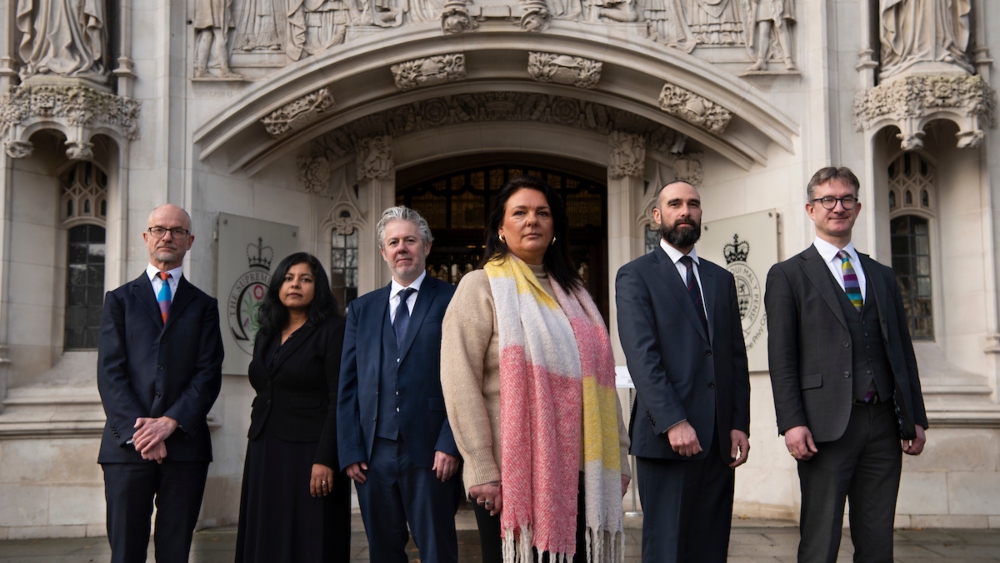
The Supreme Court recently handed down Judgment In the case of Secretary of State for Business and Trade v Mercer [2024] UKSC 12.
Background
The case concerned Fiona Mercer, a support worker and Trade Union Rep, who was suspended by her employer, AFG, after participating in lawful strike action. Ms Mercer claimed detrimental treatment under section 146 of the Trade Union and Labour Relations (Consolidation) Act 1992 (“TULRCA”), which states:
“A worker has the right not to be subjected to any detriment as an individual by any act, or any deliberate failure to act, by his employer if the act or failure takes place for the sole of main purpose of […] preventing or deterring him from taking part in the activities of an independent trade union at an appropriate time, or penalising him for doing so.”
She contended that her suspension was aimed at deterring her trade union involvement. The matter before the Supreme Court boiled down to whether TULRCA offered protection against such treatment, particularly actions short of dismissal, and whether this aligned with Article 11 of the European Convention on Human Rights (“ECHR”), the right to freedom of assembly and association.
Judgment
Examining the construction of section 146 and its compliance with Article 11, the Court noted the absence of explicit protection in TULRCA against non-dismissal detriments for engaging in lawful strikes. Protection under TULRCA applies only outside working hours or when not conflicting with job responsibilities. This interpretation, consistent with related provisions, led to the conclusion that section 146 didn’t safeguard workers from non-dismissal detriments during industrial action.
The Supreme Court, sitting with five Justices, unanimously allowed Ms Mercer’s appeal, asserting that section 146 TULRCA did not provide protection against detriment short of dismissal (in this case, suspension) and as such, ruled that TULRCA was incompatible with Article 11 ECHR, holding that:
“…the failure to provide any legislative protection at all against any sanction short of dismissal for lawful industrial action against those who take it, does put the United Kingdom in breach of its positive obligation to secure effective enjoyment of the right to participate in a lawful strike…”
The Court has a duty to interpret legislation in line with the European Convention wherever possible, however, they found no feasible interpretation of section 146 that aligned with Article 11. Thus, a declaration of incompatibility with the Convention rights under section 4 of the Human Rights Act was warranted. Despite the Court of Appeal’s reluctance to issue such a declaration due to a perceived legislative gap, the Supreme Court disagreed, with Lady Simler stating:
“In my view this is not one of those cases where it is inappropriate to make a declaration of incompatibility […] Indeed, I can discern no good reason for rejecting the remedial measure provided for by section 4 of the HRA by making such a declaration.”
The Court made reference to Parliament’s prerogative and ability to address policy choices and make legislative change in striking a fair balance, but emphasised that this wasn’t grounds for refusing a declaration of incompatibility.
Implications
UNISON General Secretary, Christina McAnea stated of the Judgment:
“This is the most important industrial action case for decades. It’s a victory for every employee who might one day want to challenge something bad or unfair their employer has done.”
In essence, the judgment highlighted the disconnect between domestic legislation and international human rights standards concerning workers’ rights to engage in lawful industrial action. It underscored the necessity for legislative amendments to ensure a fair balance between the rights of workers and the interests of employers, in line with the UK’s obligations under the European Convention on Human Rights.
This Judgment comes as a huge blow to the Government whom, for the past few years, have been decimating the rights of workers, in particular unions and those seeking to exercise their rights to strike. Earlier last year we looked at the extremely restrictive and dystopian Minimum Service Levels Bill, a law which restricted the rights of workers more than any other in the past 100 years. Greater Manchester Law Centre (where I just so happen to also discuss employment rights) recently spoke to John Hendy KC about this political climate, Lord Hendy pointed out that the restrictive laws on trade unions:
“…has been made worse since then by the Trade Union Act 2016. The cumulative effect of this legislation has meant that the UK framework severely limits the right to strike”
The Judgment will require the Government to face the deficit in strike legislation or openly admit they will not be complying with International Law.

Avaia Williams – Founder
This blog was published on Monday 4th May 2024
 Nightingale Rights Initiative