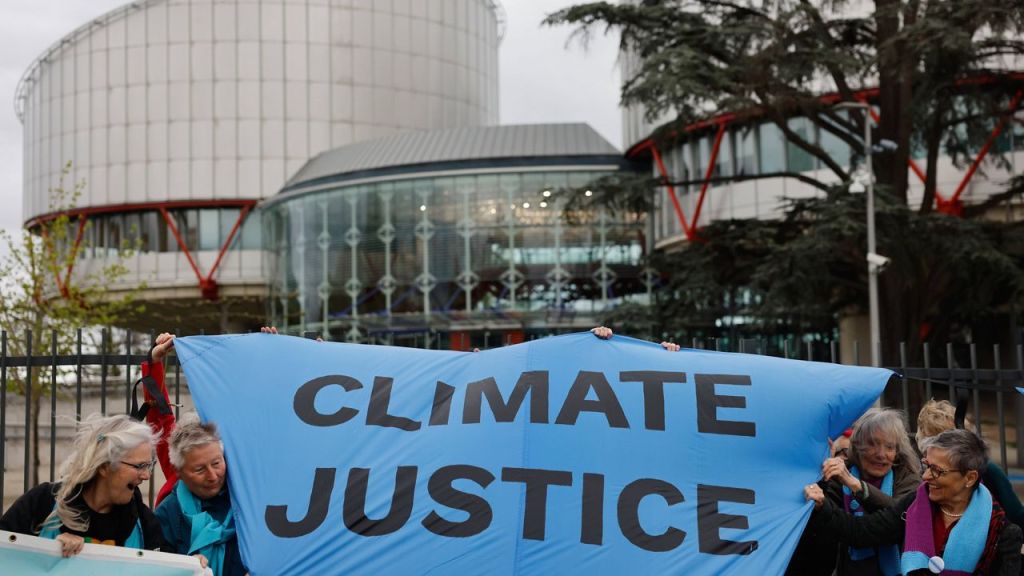
Verein KlimaSeniorinnen Schweiz and Others v. Switzerland
If involved in environmental law or climate justice, it would have been difficult to spend the last couple of weeks without having your LinkedIn feed flooded with comments on the judgment rendered by the European Court of Human Rights last Tuesday.
Background to the case
The case was brought by four elderly women and a Swiss association (promoting and implementing effective climate protection on behalf of its members who are all older women) concerned about the consequences of global warming on their living conditions and health. Indeed, they complained of health problems that are exacerbated during heat waves, significantly affecting their lives, well-being, and living conditions. They argued that the Swiss government was failing in its duties under the Convention to mitigate the effects of climate change.
On the standing of defenders
It must be noted that only the association (Verein KlimaSeniorinnen Schweiz) was recognised with victim status under Article 34, therefore making their complaint the only one admissible and ruled to have standing.
On the finding of a violation of access to court (article 6 para 1)
The court found there had been a violation of Article 6 para 1 of the Convention on access to court and more precisely on the implementation of the mitigation measures under domestic law. Indeed, the Swiss courts did not provide convincing reasons regarding their refusal to examine the merits of the association’s complaint. The national courts failed to take into consideration the compelling evidence concerning climate change and did not take the complaints seriously. Indeed, all appeals made to the court up to the Federal Supreme Court (May 2020) were dismissed.
On the finding of a violation of the right to respect for private and family life (article 8)
The court found that Article 8 (the right to respect for private and family life) was violated because it encompasses a right to effective protection by the State authorities from the serious adverse effects of climate change on lives, health, well-being, and quality of life. The court reveals that this obligation flows from the causal relationship between climate change and the enjoyment of the rights enshrined in the Convention. Indeed, there is no right to a healthy environment explicitly enshrined in the Convention. Let’s remember that the Convention was written in a whole other context (post-WWII) but it has been dynamically interpreted by the judges. Therefore, because the object and purpose of the Convention is the protection of human rights, the provisions must be interpreted and applied to guarantee their effectiveness.
The court found that the Swiss Confederation had failed to comply with its duties (we refer to “positive obligations” meaning taking active steps to fulfill the rights enshrined in the Convention). The court highlighted the failure of the Swiss authorities to quantify national greenhouse gas (GHG) emissions limitations. Furthermore, the country had also failed to meet its past GHG emission reduction targets.
As usual, the Court recalled the margin of appreciation (“wide discretion”) of national authorities regarding the implementation of legislation and national measures. However, the Court asserted that the authorities in question did not act in a timely and appropriate way in developing and implementing relevant legislation and measures in this case.
Environmental protection and climate change in front of the ECtHR before
Using the above mentioned dynamic interpretation of the Convention, the ECtHR has in the past used dispositions of the Convention, mainly articles 2 (right to life), 3 (inhumane and degrading treatments), 6 (access to court) and 8 (private and family life) to indirectly protect environmental rights (for examples see:Öneryildis v. Turkey (2004); Florea v. Germany (2010); López Ostra v. Spain (1994)). The Court usually resorted to the use of the “margin of appreciation” and the “positive obligations” incumbent on states to timidly protect human rights violated by insufficient consideration of environmental harm. However, these cases did not concern climate change but more generally environmental health. Therefore, it has never before explicitly held that States have the duty to mitigate climate change to protect human rights.
What does the ruling mean?
For Switzerland. According to Article 42 of the ECHR, the judgments of the Court are binding (they must be executed) because they are final and have the force of res judicata (literally means “matter judged”). Therefore, Switzerland will have to take the necessary measures to comply with the judgment. There are always some discussions on the real effects of the ECtHR judgments but this will be too long of a discussion to include here, the Comity of Ministry has said they will keep a wide eye open to make sure Switzerland follows through with the consequences of the decision.
For the other states parties to the Convention. The judgments of the court have erga omnes (between parties involved in the case) consequences, this means they are not obliged to draw any obligations from the decision. However, they will likely take legislative and national measures to not be condemned by the Court in the future as it could logically be previewed in light of this new precedent. Indeed, it is quite common for national legislation to evolve after a judgment from the court that did not directly concern them to avoid condemnation themselves in the future. Furthermore, Andreas Zünd, Swiss judge at the ECtHR said (Le Temps, 12 April 2024) that the decision must be considered in a pan-European context and therefore concerns the other states parties to the Convention.
What must also be highlighted is that to conclude a violation of Article 8 the court relies itself on the climate commitments made by Switzerland. Indeed, the Court has no competence to influence those commitments, that mostly rely on soft law (not binding, which means no international responsibility will occur for states if they do not respect said commitments), but has made those commitments enforceable. The domestic enforcement of international climate change commitments is a growing trend that was highlighted by the UNEP Climate litigation report from 2023. The reasoning of the ECtHR resembles what has been done on the national level as can be seen in France with the cases of l’Affaire du siècle (2021) and Commune de Grande-Synthe v. France (2021).
For the world. This is the first time that an international court explicitly links climate change to the enjoyment of life, well-being, and health. We can hope that this historic judgment has positive repercussions all over the world. Indeed, judicial orders are not closed and the dialogue between judges is especially relevant in the global challenge that is climate change.
Another exciting prospect is the Advisory Opinion sought by the Republic of Vanuatu on the obligations of states regarding climate change in front of the International Court of Justice. Lastly, even though this is great news we must not forget that there are large failings when it comes to climate litigation all over the world, and it seems the biggest challenge to overcome is the formalities. Indeed, two other cases were judged by the ECtHR last Tuesday but both were rejected for formal reasons (for instance lack of exhaustion of internal for the case filed by the Portuguese. Despite, the legitimate apprehensions regarding the effect of this case, it is still incredibly good news and allows us to regain hope.

Ines Carter – Writer
This blog was published on 20 April 2024
 Nightingale Rights Initiative
This is great news. Let us hope it is the start of something big.
LikeLike